Thank you for writing to us. One of our executive will reach back to you through your submitted medium. In case there’s an urgency, feel free to connect over WhatsApp for faster response.
Prefer calling? Dial +918042782001 (International callers) or 08042782001 (Indian callers).
Calcium Acetate Tablets Uses, Dosage, and Side Effects
68aecb73187d60a4c6d10a3a"
Introduction
For individuals with chronic kidney disease (CKD), managing phosphorus levels is a critical part of maintaining health and avoiding further complications. One of the most effective solutions prescribed by nephrologists is Calcium Acetate 667 mg, a phosphate binder that helps control high blood phosphate levels in patients with impaired kidney function.
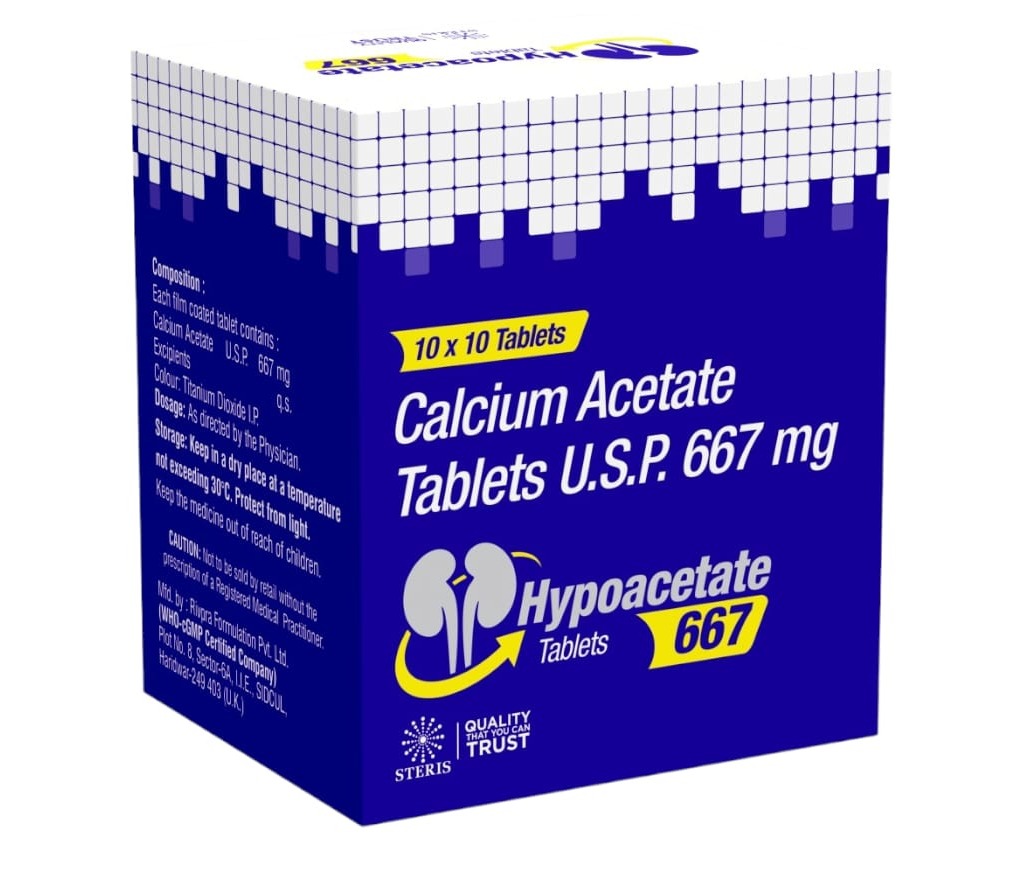
HYPOACETATE 667, a trusted brand by Steris Healthcare, delivers calcium acetate 667 mg in high-quality tablet form, ensuring better phosphate control and overall safety for patients who require long-term care.
Let’s explore everything you need to know about calcium acetate 667 mg, including how it works, its structure, uses, dosage, and more — all from a patient’s point of view.
What is Calcium Acetate 667 mg?
Calcium Acetate 667 mgis an oral phosphate binder used to lower blood phosphate levels in patients with end-stage renal disease (ESRD) or chronic kidney disease who are on dialysis. Because failing kidneys cannot efficiently remove excess phosphate from the blood, calcium acetate helps bind phosphate in the digestive tract and prevents its absorption into the bloodstream.
This medication is not a calcium supplement, even though it contains calcium — its main purpose is to prevent complications of high phosphate, such as bone disease and heart problems.
Calcium Acetate Formula and Structure
Understanding the calcium acetate formula and structure helps explain how the medication functions at the molecular level.
Chemical formula:Ca(C₂H₃O₂)₂
Structure: Calcium ion (Ca²⁺) bonded with two acetate ions (C₂H₃O₂⁻)
This combination allows the calcium ion to bind with dietary phosphate in the gastrointestinal tract, forming an insoluble complex that is excreted through the stool.
Calcium Acetate Tablet Uses
Calcium acetate tablet is used mainly for one important reason:
To reduce elevated blood phosphate levels in patients with chronic kidney disease on dialysis
By reducing phosphate absorption from food, Calcium Acetate 667 mghelps:
Maintain normal phosphate levels
Prevent renal osteodystrophy (bone disease caused by kidney failure)
Reduce the risk of vascular calcification and heart disease
How to Take Calcium Acetate 667 mg
Dosage: Usually taken with meals, as food provides the phosphate that needs binding
The starting dose may vary based on phosphate levels and individual needs
Tablets should be swallowed whole and not crushed unless directed
Always follow your doctor’s instructions carefully and attend routine blood tests to monitor calcium and phosphate balance.
Calcium Acetate Side Effects
While generally well-tolerated, calcium acetate tablets may cause some side effects, especially if dosage is not closely managed.
Common side effects:
Nausea
Vomiting
Constipation
Dry mouth
Serious side effects (report to doctor immediately):
Proper monitoring by your healthcare provider helps minimize the risks associated with calcium acetate 667 mg.
Frequently Asked Questions
Q1: What is the formula of calcium acetate?
A: The chemical formula of calcium acetate is Ca(C₂H₃O₂)₂. It consists of one calcium ion and two acetate ions.
Q2: Can calcium acetate be used as a calcium supplement?
A: No. While it contains calcium, its primary role is to bind phosphate, not to supplement calcium in the diet.
Q3: What if I miss a dose of calcium acetate 667 mg?
A: If you miss a dose, take it with your next meal. Do not double the dose to make up for a missed one.
Q4: How long should I take calcium acetate tablets?
A: As long as you are on dialysis or as prescribed by your doctor. It is a long-term management medication.
Why Choose HYPOACETATE 667 by Steris Healthcare?
When managing chronic kidney disease, reliability, purity, and patient safety are non-negotiable. HYPOACETATE 667 by Steris Healthcare meets these standards through:
High-purity calcium acetate formulation
Consistent phosphate-binding performance
WHO-GMP certified manufacturing facilities
Affordable pricing for long-term care
Clinician-trusted, patient-centered solutions
Steris Healthcare has a strong reputation for providing quality nephrology products that support better outcomes for patients across India and globally.
A Patient’s Perspective
Living with kidney disease can be overwhelming. Medications like calcium acetate 667 mg are crucial not only for survival but also for maintaining a better quality of life.
If you’re on dialysis and managing your phosphate levels, HYPOACETATE 667 can make a big difference in preventing complications and staying on track with your treatment.
Final Thoughts
Calcium Acetate 667 mg is an essential therapy for patients with chronic kidney disease to control phosphate levels and protect overall health. With the right product and consistent usage, you can manage your condition more confidently and comfortably.
Choosing HYPOACETATE 667 by Steris Healthcare means you’re choosing trusted quality, effective control, and peace of mind for your kidney care journey.
Speak to your nephrologist today about HYPOACETATE 667. Choose Steris Healthcare for trusted renal care solutions. Because your kidneys deserve the best.