
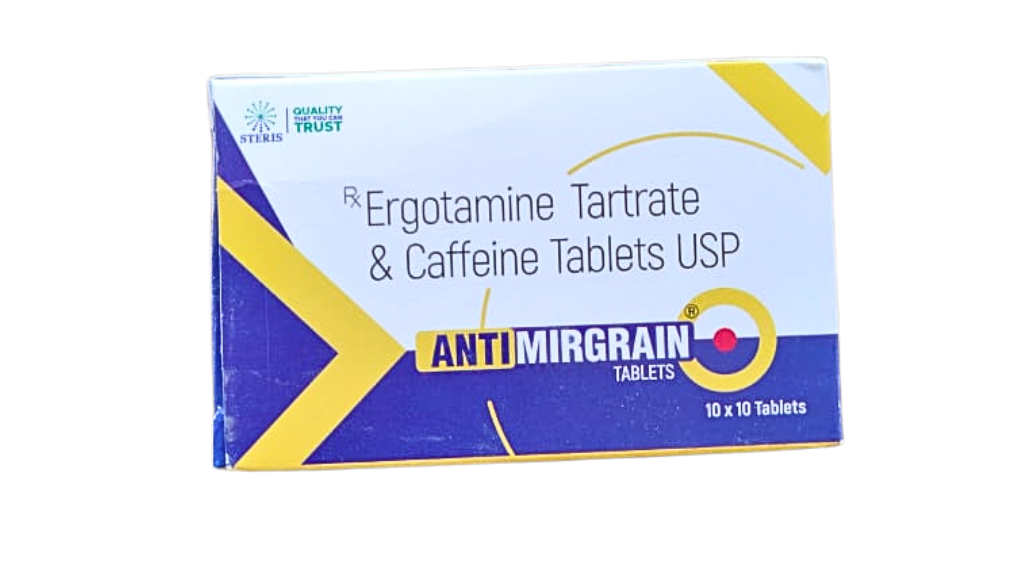
Migraine attacks can be extremely painful and may interfere with your daily routine, work, and quality of life. Ergotamine tartrate and caffeine tablets are prescription medicines commonly used to treat acute migraine headaches. They are most effective when taken at the first sign of a migraine attack and are not intended for routine headache relief or migraine prevention.
What Are Ergotamine Tartrate and Caffeine Tablets?
Ergotamine tartrate and caffeine tablets combine two active ingredients:
- Ergotamine Tartrate – An anti-migraine medicine that narrows widened blood vessels associated with migraine attacks.
- Caffeine – Enhances the absorption and effectiveness of ergotamine while also helping improve headache relief.
This combination is prescribed for treating acute migraine attacks, with or without aura. It is not recommended for tension headaches or other types of chronic headaches.
Ergotamine Tartrate and Caffeine Tablets Uses
The primary ergotamine tartrate and caffeine tablets uses include:
- Treatment of acute migraine headaches
- Relief from migraine with aura
- Relief from migraine without aura
- Reducing migraine-associated throbbing pain
- Managing migraine-related nausea (as part of overall treatment)
- Reducing sensitivity to light (photophobia)
- Reducing sensitivity to sound (phonophobia)
- Short-term treatment of severe migraine attacks
- Treatment of recurrent migraine episodes when prescribed by a doctor
How Do Ergotamine Tartrate and Caffeine Tablets Work?
Migraineattacks are believed to involve widening of blood vessels in the brain along with the release of inflammatory chemicals.
Ergotamine Tartrate
Ergotamine acts on serotonin and alpha-adrenergic receptors, causing constriction of dilated cranial blood vessels. This helps reduce migraine pain and associated symptoms.
Caffeine
Caffeine improves the gastrointestinal absorption of ergotamine, allowing it to work more effectively. It may also contribute to headache relief by enhancing blood vessel regulation.
Together, these ingredients provide targeted treatment for migraine attacks rather than masking pain like ordinary painkillers.
Why Are Ergotamine Tartrate and Caffeine Tablets Important?
Migraine is more than just a headache. It can affect vision, concentration, work productivity, and daily activities. Untreated migraine attacks may last from several hours to several days.
Ergotamine tartrate and caffeine tablets are important because they:
- Target migraine-specific mechanisms
- Provide relief when taken early
- Help reduce headache intensity
- Improve daily functioning during an attack
- Offer an option for patients who do not respond adequately to simple analgesics
Key Benefits of Ergotamine Tartrate and Caffeine Tablets
Patients may benefit from this medication in several ways:
- Targets migraine pain at its source
- Works best when taken early during an attack
- Helps reduce throbbing headache
- May relieve associated nausea
- Reduces sensitivity to light and sound
- Improves overall comfort during migraine episodes
- Convenient oral tablet formulation
- Can shorten the duration of migraine attacks in appropriate patients
- Prescription-based therapy for acute migraine management
What Are the Benefits?
Fast-Acting Migraine Relief
The medicine is designed to relieve migraine symptoms rather than simply dull pain.
Improved Effectiveness
Caffeine increases the absorption of ergotamine, supporting its therapeutic action.
Better Daily Function
By reducing migraine symptoms, many patients can return to normal activities sooner.
Convenient to Use
The tablet form is easy to carry and take at the onset of migraine symptoms.
Who Can Benefit from Ergotamine Tartrate and Caffeine Tablets?
Your doctor may prescribe these tablets for:
- Adults with acute migraine attacks
- Patients experiencing migraine with aura
- Patients experiencing migraine without aura
- Individuals who require prescription migraine therapy after clinical evaluation
Dosage Guidelines
Always follow your doctor's instructions.
General guidance includes:
- Take the tablet at the first sign of a migraine attack.
- Do not exceed the prescribed dose.
- Do not take the medicine every day unless specifically directed by your healthcare provider.
- Avoid frequent use, as overuse may lead to medication-overuse headaches or other complications.
Side Effects of Ergotamine Tartrate and Caffeine Tablets
Like all medicines, ergotamine tartrate and caffeine tablets may cause side effects.
Common Side Effects
- Nausea
- Vomiting
- Dizziness
- Mild stomach discomfort
- Tingling or numbness in fingers or toes
- Muscle cramps
- Weakness
- Restlessness
Serious Side Effects
Seek immediate medical attention if you experience:
- Chest pain
- Severe numbness in hands or feet
- Cold or blue fingers and toes
- Severe abdominal pain
- Difficulty breathing
- Irregular heartbeat
- Sudden weakness
- Vision changes
- Allergic reactions such as swelling or rash
Precautions and Warnings
Before taking ergotamine tartrate and caffeine tablets, tell your doctor if you have:
- Coronary artery disease
- High blood pressure
- Liver disease
- Kidney disease
- Peripheral vascular disease
- Diabetes
- History of stroke
- Pregnancy or plans to become pregnant
- Breastfeeding
Drug Interactions
Ergotamine tartrate and caffeine tablets may interact with:
- Macrolide antibiotics
- Azole antifungals
- Protease inhibitors
- Certain antidepressants
- Other ergot-containing medicines
- Triptan migraine medications (within the recommended interval)
- Grapefruit juice, which may increase ergotamine levels
Storage Instructions
- Store at room temperature.
- Keep away from moisture and direct sunlight.
- Keep in the original packaging.
- Keep out of reach of children.
- Do not use after the expiry date.
Who Should Avoid Ergotamine Tartrate and Caffeine Tablets?
These tablets are generally not suitable for people with:
- Uncontrolled hypertension
- Severe heart disease
- Peripheral vascular disease
- Severe liver impairment
- Severe kidney impairment
- Pregnancy
- Known allergy to ergotamine, caffeine, or related compounds
Buying Guide
Before purchasing ergotamine tartrate and caffeine tablets:
- Buy only from licensed pharmacies.
- Ensure you have a valid prescription if required in your region.
- Check the expiry date and packaging integrity.
- Confirm the correct strength and manufacturer.
- Use the medicine only as directed by your healthcare provider.
Frequently Asked Questions
1. Is ergotamine good for headaches?
Ergotamine is specifically used for acute migraine headaches. It is not recommended for ordinary tension headaches or other common headaches unless prescribed by a doctor.
2. Are caffeine pills good for migraines?
Caffeine alone may help some people during a migraine, but caffeine pills are not a substitute for prescription migraine treatment. Excess caffeine can also trigger headaches in some individuals.
3. What is the strongest medicine for migraines?
There is no single "strongest" migraine medicine. Treatment depends on the individual and may include triptans, ergotamine-containing medicines, CGRP-targeted therapies, NSAIDs, or preventive medications. Your doctor will recommend the most appropriate option based on your medical history.
4. What are the side effects of ergotamine?
Common side effects include nausea, vomiting, dizziness, tingling in the fingers or toes, muscle cramps, and stomach discomfort. Serious symptoms such as chest pain or severe numbness require immediate medical attention.
5. Can ergotamine be taken daily?
No. Ergotamine is not intended for daily use. Frequent or excessive use can increase the risk of serious side effects and medication-overuse headaches. Always follow your doctor's dosing instructions.
6. What are three common side effects?
Three commonly reported side effects are:
- Nausea
- Dizziness
- Vomiting
7. How quickly do ergotamine tartrate and caffeine tablets work?
They work best when taken at the first sign of a migraine attack. The onset of relief varies between individuals.
8. Can I take ergotamine after the migraine becomes severe?
The medicine is generally more effective when taken early. Delayed use may reduce its effectiveness.
9. Can I drive after taking ergotamine tablets?
Some people may experience dizziness or drowsiness. Avoid driving or operating machinery until you know how the medicine affects you.
10. Are ergotamine tartrate and caffeine tablets safe during pregnancy?
No. They are generally contraindicated during pregnancy because they may affect blood flow and uterine contractions. Consult your healthcare provider immediately if you are pregnant or planning pregnancy.
11. Can these tablets prevent future migraines?
No. They are used to treat an ongoing migraine attack, not to prevent future attacks.
12. Should I avoid caffeine from coffee while taking these tablets?
Since the medication already contains caffeine, ask your doctor whether you should limit additional caffeinated beverages to reduce the risk of side effects.
Conclusion
Ergotamine tartrate and caffeine tablets are a prescription treatment for acute migraine attacks, designed to relieve symptoms by constricting dilated cranial blood vessels and enhancing therapeutic effectiveness through the combination of ergotamine and caffeine. They are most effective when taken at the earliest signs of a migraine and should not be used for routine headache relief or daily migraine prevention. Safe use requires following your healthcare provider's instructions, avoiding overuse, and being aware of potential side effects and drug interactions. If migraines become more frequent, severe, or resistant to treatment, consult your healthcare professional for a comprehensive evaluation and personalized management plan.