
Iron deficiency anemia is a significant global health issue affecting millions of people across all age groups. It occurs when the body lacks sufficient iron to produce hemoglobin, the protein responsible for transporting oxygen in the blood. Symptoms often include fatigue, weakness, dizziness, shortness of breath, and impaired cognitive functions. While oral iron supplements are commonly prescribed, many patients face challenges such as gastrointestinal discomfort, poor absorption, or inadequate response to treatment.
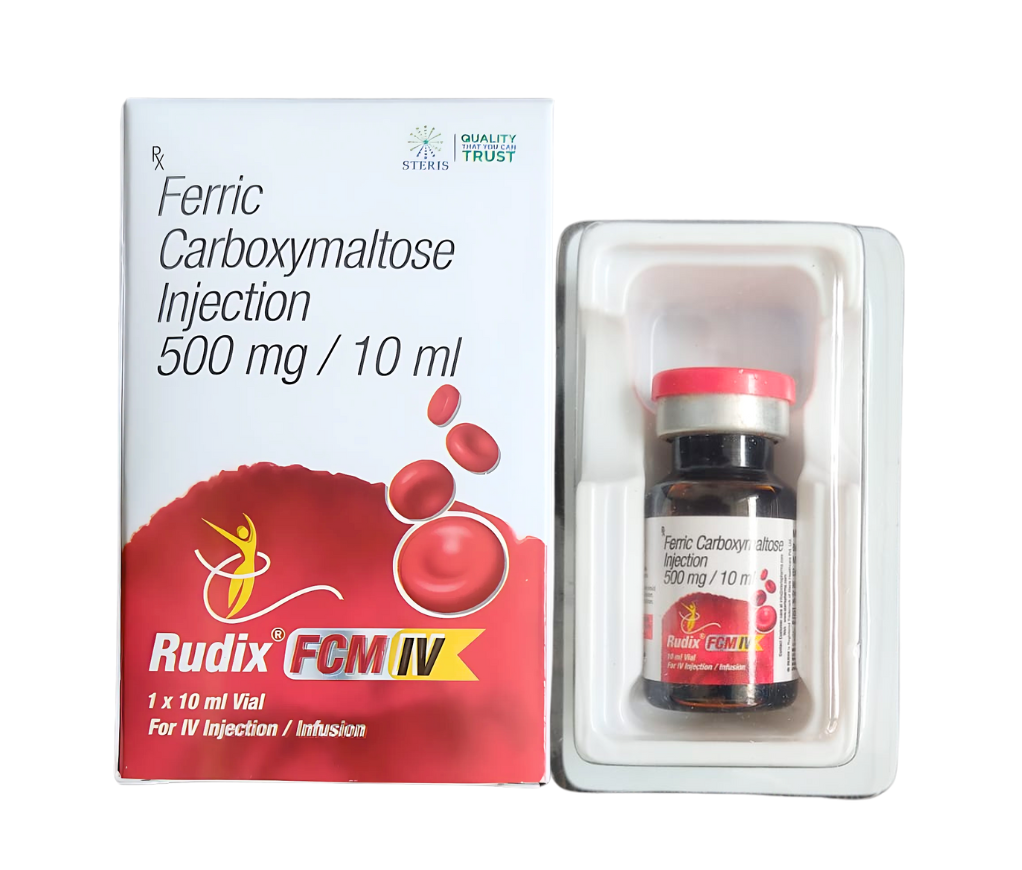
Ferric Carboxymaltose Injection, commercially available as RUDIX FCM IV INJECTION, provides a modern solution for these challenges. This intravenous (IV) iron therapy allows rapid replenishment of iron stores, even in patients who cannot tolerate oral iron. Its formulation ensures controlled and safe delivery of iron directly into the bloodstream, which is especially beneficial for patients with chronic illnesses, gastrointestinal disorders, or those requiring rapid correction of anemia.
The convenience, efficiency, and safety of RUDIX FCM IV INJECTION make it a preferred choice for clinicians and patients alike. In this article, we provide a detailed overview of its uses, benefits, dosage, potential side effects, and essential precautions.
Ferric carboxymaltose injection uses
RUDIX FCM IV INJECTION is primarily indicated for the treatment of iron deficiency when oral iron therapy is inadequate, intolerable, or impractical. Its clinical applications include:
Iron Deficiency Anemia (IDA):
Effective in adults with moderate to severe iron deficiency.
Provides a rapid increase in hemoglobin levels compared to oral iron, which can take weeks to months.
Chronic Kidney Disease (CKD):
Often used in CKD patients receiving erythropoiesis-stimulating agents (ESAs) to enhance hemoglobin response.
Helps reduce the need for blood transfusions in advanced kidney disease.
Postpartum and Perinatal Anemia:
Supports recovery of iron stores in women after childbirth, aiding energy restoration and overall well-being.
Gastrointestinal Malabsorption Disorders:
Beneficial for patients with Crohn’s disease, ulcerative colitis, celiac disease, or other conditions impairing oral iron absorption.
Preoperative Preparation:
Administered to patients prior to surgery to reduce transfusion requirements and improve surgical outcomes.
Chronic Disease Anemia:
Useful in managing anemia associated with chronic heart failure, cancer, or inflammatory conditions where oral iron is ineffective.
This broad range of applications highlights RUDIX FCM IV INJECTION as a versatile tool for addressing iron deficiency across diverse patient populations.
Benefits
The use of Ferric Carboxymaltose Injection provides several distinct advantages over traditional oral iron supplements:
Rapid Iron Replenishment:
IV administration bypasses the gastrointestinal tract, allowing large doses of iron to be delivered directly to the bloodstream in a single session.
Patients often notice improvements in energy levels and hemoglobin within days rather than weeks.
Enhanced Patient Compliance:
Oral iron often requires daily dosing over months, which many patients struggle to maintain.
RUDIX FCM IV INJECTION reduces hospital visits by allowing high-dose single or double infusions.
Minimal Gastrointestinal Side Effects:
Oral iron can cause constipation, nausea, and abdominal discomfort. IV iron largely avoids these issues, making it more tolerable for sensitive patients.
Safe for Special Populations:
Ideal for patients with malabsorption syndromes, chronic inflammatory conditions, or post-surgical needs where oral iron is inadequate.
Improved Quality of Life:
Faster correction of anemia improves physical performance, cognitive function, and overall well-being.
Particularly important for working adults, athletes, and postpartum mothers.
Controlled and Predictable Dosing:
Each infusion delivers a precise amount of iron, reducing the risk of under- or over-treatment.
Dosage
Proper dosing of RUDIX FCM IV INJECTION is critical to ensure efficacy and safety. The dosage depends on the patient’s body weight, hemoglobin level, and total iron deficit.
Standard Adult Dose:
500 mg to 1000 mg per infusion, depending on individual requirements.
Maximum cumulative dose is usually 1000 mg per week.
Administration Guidelines:
Administered as an intravenous infusion over 15–30 minutes.
Some patients may require multiple infusions to achieve the total required iron replenishment.
Special Considerations:
Pediatric dosing is weight-based and should only be determined by a pediatrician or hematologist.
Patients with chronic diseases, liver impairment, or heart conditions may need adjusted dosing and careful monitoring.
Tip: Blood tests including hemoglobin, ferritin, and transferrin saturation should be conducted prior to infusion and periodically during therapy to monitor progress and avoid iron overload.
Ferric carboxymaltose injection side-effects
While generally safe, RUDIX FCM IV INJECTION may cause mild to moderate side effects in some patients. Understanding potential reactions is important for safe administration:
Common Side Effects:
Headache and dizziness
Nausea and vomiting
Mild fever or chills
Injection site pain, redness, or swelling
Muscle or joint aches
Serious but Rare Side Effects:
Allergic reactions such as rash, itching, or facial swelling
Difficulty breathing, wheezing, or throat tightness
Low blood pressure or rapid heartbeat
Anaphylactic reactions (extremely rare)
Most side effects are temporary and resolve within a few hours to days. Severe reactions require immediate medical attention. Infusions should always be conducted in a clinical setting with emergency care available.
Precautions and Warnings
Proper precautions ensure that RUDIX FCM IV INJECTION is used safely and effectively:
Hypersensitivity:
Avoid in patients with a known allergy to ferric carboxymaltose or other IV iron preparations.
Medical History:
Inform the doctor if you have liver disease, heart disease, infections, or chronic inflammatory conditions.
Pregnancy and Lactation:
While generally safe, it should only be used if clearly indicated. Close supervision by an obstetrician or pediatrician is recommended.
Laboratory Monitoring:
Regular checks of hemoglobin, ferritin, and transferrin saturation are essential to prevent iron overload.
Drug Interactions:
Avoid concurrent use with oral iron supplements and certain medications without medical supervision.
Infusion Safety:
Infusions must be performed in a healthcare facility equipped to manage severe allergic reactions.
Key Warning: Patients with a history of severe hypersensitivity to IV iron should not receive RUDIX FCM IV INJECTION.
Conclusion
RUDIX FCM IV INJECTION (Ferric Carboxymaltose Injection) is a modern, safe, and highly effective solution for treating iron deficiency anemia in adults and special populations. Its advantages include rapid correction of iron deficiency, improved patient compliance, minimal ga
strointestinal side effects, and significant improvement in quality of life.
With proper dosage, medical supervision, and monitoring, this IV therapy is a reliable option for patients who cannot tolerate or benefit adequately from oral iron. It is particularly valuable for individuals with chronic illnesses, postpartum anemia, gastrointestinal malabsorption, or preoperative needs.
By addressing iron deficiency effectively, RUDIX FCM IV INJECTION helps patients regain energy, vitality, and overall well-being. Always consult a healthcare professional before starting any iron therapy to ensure safety and optimal results.