
Product Overview
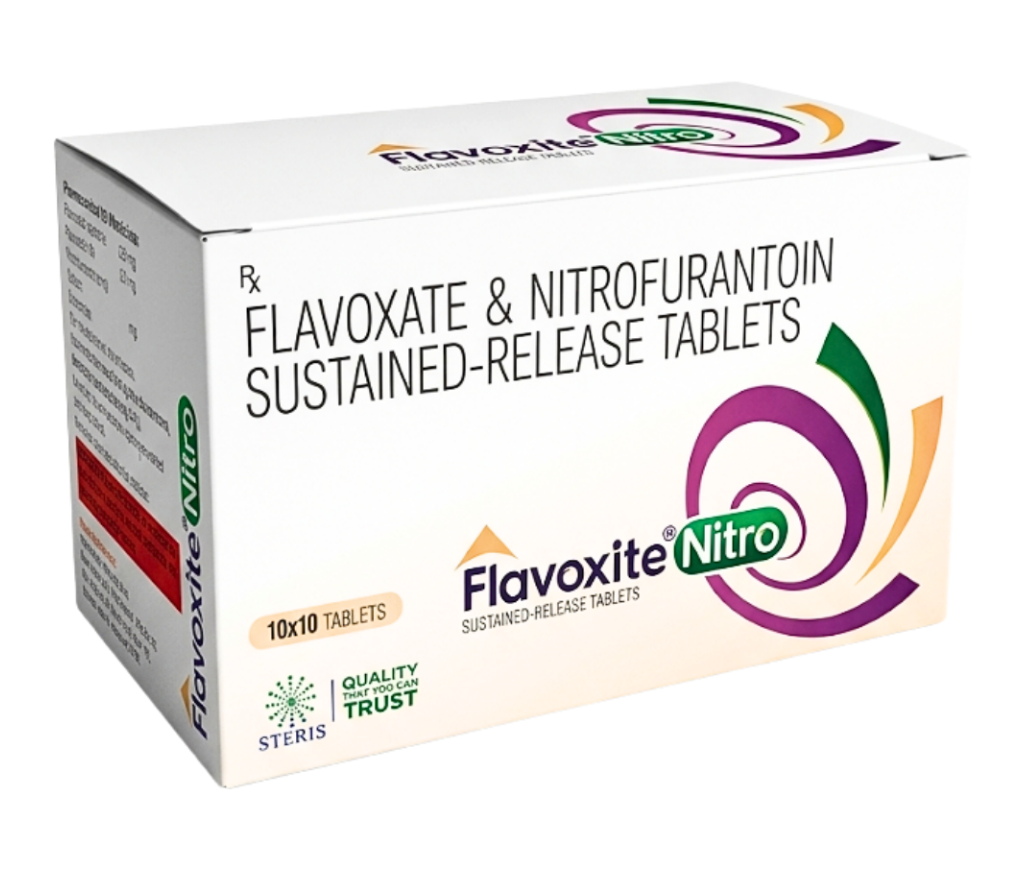
Flavoxate Hydrochloride 200 mg And Nitrofurantoin 100 mg Sustained Release Tablets contain two active pharmaceutical ingredients that have different roles in urinary tract management. Flavoxate Hydrochloride is a urinary antispasmodic that helps relieve bladder muscle spasms and associated urinary discomfort, while Nitrofurantoin is an antibacterial medicine used against susceptible bacteria responsible for certain urinary tract infections (UTIs).
Urinary tract infections can cause symptoms such as burning during urination, frequent urination, urinary urgency, and lower abdominal discomfort. Understanding the individual functions of these ingredients helps healthcare professionals assess appropriate treatment options.
The proposed fixed-dose combination requires verification of applicable regulatory approval before commercial promotion in India. The CDSCO Subject Expert Committee did not recommend approval of this specific formulation in its April 2025 review. Therefore, this description is intended for educational and pharmaceutical information purposes, not as confirmation that the combination is approved for marketing.
Composition of Flavoxate Hydrochloride 200 mg And Nitrofurantoin 100 mg Sustained Release Tablets
The specified formulation contains:
Flavoxate Hydrochloride – 200 mg: A urinary antispasmodic that acts directly on urinary tract smooth muscle to reduce spasms and associated symptoms.
Nitrofurantoin – 100 mg Sustained Release: An antibacterial agent used for certain susceptible bacterial urinary tract infections. The sustained-release formulation is designed to modify the release of the active ingredient.
The exact release characteristics and approved product specifications should be confirmed using the manufacturer's official documentation.
Uses of Flavoxate Hydrochloride 200 mg And Nitrofurantoin 100 mg Tablets
The individual ingredients have different therapeutic purposes:
Urinary Tract Infection Management: Nitrofurantoin is used to treat certain lower urinary tract infections caused by susceptible bacteria.
Burning During Urination: Flavoxate may provide symptomatic relief from painful urination associated with urinary tract conditions.
Urinary Frequency: Flavoxate helps reduce involuntary urinary tract contractions that may contribute to frequent urination.
Urinary Urgency: Its antispasmodic action may help relieve sudden urges to urinate.
Bladder Spasm Management: Flavoxate acts directly on urinary smooth muscle to help reduce bladder spasms.
These ingredient-specific uses should not be interpreted as proof of the efficacy or approved indication of their combined fixed-dose formulation.
Key Benefits and Pharmacological Actions
1. Supports Antibacterial Treatment
Nitrofurantoin works against susceptible urinary pathogens and is used in the treatment of selected lower urinary tract infections.
2. Helps Relieve Bladder Spasms
Flavoxate acts on urinary tract smooth muscle to reduce spasmodic contractions and associated discomfort.
3. Supports Relief From Urinary Urgency
Flavoxate may help reduce symptoms such as urgency and increased urinary frequency.
4. Two Different Pharmacological Actions
The ingredients have distinct mechanisms: Nitrofurantoin provides antibacterial activity, whereas Flavoxate provides symptomatic antispasmodic activity.
5. Sustained-Release Formulation
The sustained-release designation describes a modified drug-release characteristic. The actual release profile must be established through product-specific pharmaceutical documentation.
How Do Flavoxate and Nitrofurantoin Work?
Flavoxate Hydrochloride: This medicine acts directly on smooth muscles of the urinary tract, helping reduce involuntary contractions and bladder spasms. It is used for symptomatic relief of urinary urgency, frequency, dysuria, and related discomfort.
Nitrofurantoin: This antibacterial medicine interferes with bacterial cellular processes, producing antibacterial activity against susceptible organisms. It is primarily used for selected lower urinary tract infections and is not suitable for every type of urinary infection.
Possible Side Effects
Like other prescription medicines, these ingredients may cause unwanted effects.
Possible side effects of Flavoxate include:
Dry mouth
Nausea
Vomiting
Dizziness
Headache
Blurred vision
Drowsiness
Possible side effects of Nitrofurantoin include:
Nausea and vomiting
Loss of appetite
Diarrhoea
Headache
Dizziness
Allergic skin reactions
Rare but serious adverse reactions associated with Nitrofurantoin include pulmonary reactions, liver injury, peripheral neuropathy, and haemolytic anaemia.
Seek immediate medical advice for breathing difficulty, persistent cough, yellowing of the skin or eyes, unusual numbness, or severe allergic reactions.
Precautions and Medical Advice
Nitrofurantoin requires particular caution in patients with impaired kidney function, liver disease, lung conditions, or G6PD deficiency. It is contraindicated in certain circumstances, including pregnancy at term. Flavoxate also requires caution in patients with glaucoma and urinary or gastrointestinal obstruction.
Patients should disclose their medical history and current medications to their healthcare professional. Antibiotics must only be used when prescribed, and the prescribed treatment course should be followed.
Product Quality and Purchasing Information
When evaluating pharmaceutical products containing Flavoxate Hydrochloride and Nitrofurantoin, verify the following:
Actual ingredient composition and strength
Sustained-release formulation specifications
Manufacturer and manufacturing licence details
Applicable regulatory approval and marketing authorisation
Batch number and expiry date
Product packaging and quality documentation
For pharmaceutical buyers, distributors, and healthcare professionals, regulatory verification and product documentation are essential before procurement or promotion.
Frequently Asked Questions Writing
1. What are Flavoxate Hydrochloride 200 mg And Nitrofurantoin 100 mg Tablets used for?
Flavoxate Hydrochloride is used for symptomatic relief of urinary tract spasms, urgency, frequency, and painful urination. Nitrofurantoin is an antibacterial medicine used for selected lower urinary tract infections caused by susceptible bacteria.
2. What is the role of Flavoxate Hydrochloride in urinary tract treatment?
Flavoxate Hydrochloride acts directly on urinary tract smooth muscle to help reduce bladder spasms, urinary urgency, frequent urination, and associated discomfort.
3. What does Nitrofurantoin 100 mg do?
Nitrofurantoin is an antibacterial medicine that works against susceptible bacteria responsible for certain lower urinary tract infections.
4. What are the common side effects of Flavoxate and Nitrofurantoin?
Possible side effects include nausea, vomiting, dizziness, headache, dry mouth, diarrhoea, and loss of appetite. Serious reactions involving the lungs, liver, nerves, or blood cells may occur rarely with Nitrofurantoin.
5. Can Flavoxate and Nitrofurantoin treat urinary tract infections?
Nitrofurantoin treats certain susceptible bacterial urinary tract infections, whereas Flavoxate provides symptomatic relief from urinary spasms. The safety and effectiveness of the particular fixed-dose combination must be established through appropriate regulatory and clinical evidence.
6. What is the purpose of sustained-release Nitrofurantoin?
Sustained-release formulations are designed to modify the release of the active ingredient over time. The precise release characteristics depend on the formulation and its approved product specifications.
7. Can Nitrofurantoin be taken without a doctor's prescription?
No. Nitrofurantoin is an antibiotic and should only be taken under appropriate medical supervision. Unnecessary antibiotic use can contribute to antimicrobial resistance.
8. Who should take precautions before using Nitrofurantoin?
Patients with kidney or liver problems, lung disease, G6PD deficiency, or a history of Nitrofurantoin-related adverse reactions require medical assessment before treatment. Pregnancy and breastfeeding also require professional advice.