
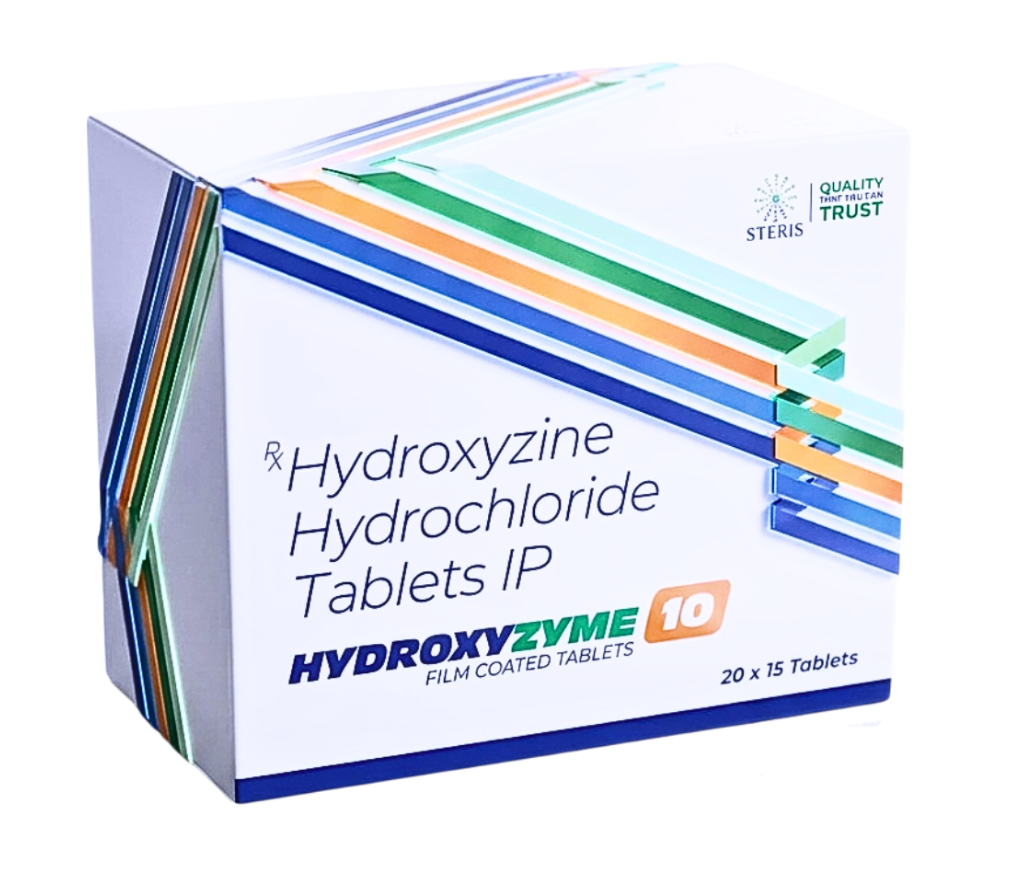
Anxiety, allergic skin reactions, and persistent itching can significantly affect daily comfort and quality of life. Whether it's the restlessness of anxiety, the discomfort of hives, or sleepless nights caused by allergic itching, these conditions often call for a medication that can address multiple symptoms effectively. To meet this need, Steris Healthcare has developed HYDROXYZYME 10, an antihistamine medication with the active composition Hydroxyzine Hydrochloride.
HYDROXYZYME 10 is primarily used for the short-term management of anxiety symptoms, relief from allergic conditions such as urticaria (hives) and itching, and as a sedative in certain clinical situations. As a first-generation antihistamine with additional anxiolytic (anti-anxiety) properties, hydroxyzine hydrochloride offers a dual benefit that makes it a versatile medication in general practice.
Why Hydroxyzine Hydrochloride Tablet Uses Are Important
Allergic reactions and anxiety, though very different conditions, share a common thread—both can significantly disrupt a person's daily functioning, sleep, and overall well-being. Persistent itching from allergies can lead to skin damage from scratching, disturbed sleep, and irritability, while unmanaged anxiety can affect concentration, relationships, and mental health.
This is where hydroxyzine hydrochloride becomes particularly valuable. Unlike medications that target only one symptom, hydroxyzine works on multiple fronts—it blocks histamine receptors to reduce allergic symptoms like itching and swelling, while also exerting a calming effect on the central nervous system to help manage anxiety and promote relaxation. This dual action makes HYDROXYZYME 10 an important option for patients who need relief from both allergic symptoms and situational anxiety, without needing multiple separate medications.
Key Benefits of Hydroxyzine Hydrochloride Tablets?
Effective relief from itching and hives—helps reduce histamine-related allergic skin reactions such as urticaria.
Anxiety symptom management—Provides short-term relief from anxiety and associated tension.
Mild sedative effect—Helps promote relaxation and improve sleep quality when anxiety or itching disrupts rest.
Fast-acting relief—Generally begins working within a reasonably short time after intake.
Dual-action formula—Addresses both allergic symptoms and anxiety-related restlessness in a single medication.
Useful in pre-procedural sedation—Sometimes used by doctors to reduce anxiety before certain medical procedures.
Non-habit-forming profile—Unlike some anti-anxiety medications, hydroxyzine is generally not associated with dependence when used as directed.
Mechanism of Action and Composition
How it works: Hydroxyzine hydrochloride primarily works by blocking H1 histamine receptors in the body, which reduces the effects of histamine release responsible for allergic symptoms such as itching, redness, and swelling. Beyond its antihistaminic action, hydroxyzine also acts on the central nervous system, where it is believed to suppress activity in certain subcortical brain regions associated with anxiety, producing a calming and sedative effect. This combined peripheral (antihistaminic) and central (anxiolytic/sedative) action is what allows hydroxyzine to be effective for both allergic conditions and short-term anxiety management.
Side Effects
Like most medications, hydroxyzine hydrochloride can cause side effects in some individuals. Common, generally mild side effects include:
Drowsiness or sedation
Dry mouth
Headache
Dizziness
Fatigue
These effects are often more noticeable when starting treatment and may lessen as the body adjusts.
Available Substitute for Hydroxyzine Hydrochloride
Other antihistamine or anti-anxiety alternatives such as Cetirizine, Levocetirizine (for allergic symptoms), or other physician-prescribed anxiolytics may be available depending on the condition being treated. However, substitution should never be done without medical supervision, as the choice of medication depends on the specific symptoms, severity, and patient history.
Dosage Guidelines for Hydroxyzine Hydrochloride
The dosage of hydroxyzine hydrochloride should always be determined by a physician based on the condition being treated, patient age, and overall health status. General guidelines include:
Typically taken as directed by the doctor, often once or a few times daily depending on the condition.
Can be taken with or without food, though taking it consistently at the same time helps maintain steady effects.
For anxiety-related use, it is generally recommended for short-term management rather than long-term continuous use.
Should not be combined with alcohol or other sedating medications without medical advice.
Do not stop or adjust the dose without consulting your doctor, especially if used regularly.
Precautions & Warnings
Inform your doctor about any history of liver disease, heart conditions, or glaucoma before starting hydroxyzine.
Avoid alcohol and other central nervous system depressants while taking this medication, as it can increase drowsiness.
Use caution when driving or operating machinery, as hydroxyzine can cause sedation.
Elderly patients may be more sensitive to the sedative effects and should use it with caution.
Pregnant or breastfeeding women should use hydroxyzine only under medical supervision.
Not recommended for long-term continuous use without periodic medical review.
Inform your doctor about all other medications you are taking to avoid potential interactions.
Store in a cool, dry place away from direct sunlight and out of reach of children.
Check the expiry date before use.
Indications, Efficacy, and Clinical Evidence
Hydroxyzine hydrochloride is widely indicated for the short-term management of anxiety, symptomatic relief of allergic conditions such as urticaria and pruritus (itching), and in some cases as a sedative premedication before medical or surgical procedures.
Key Indications:
Short-term symptomatic relief of anxiety and tension
Management of allergic skin conditions like hives and itching
Pruritus associated with various allergic conditions
Sedation as premedication in certain clinical settings (under medical supervision)
The efficacy of hydroxyzine in these indications is well established in clinical practice, largely due to its dual mechanism — peripheral H1-receptor blockade for allergic symptom relief and central nervous system modulation for anxiolytic and sedative effects. Its relatively rapid onset of action and non-habit-forming profile make it a commonly chosen option, particularly for patients requiring short-term relief rather than long-term continuous therapy. For specific clinical data or study references relevant to individual conditions, always consult a qualified healthcare provider or authoritative medical literature.
Frequently Asked Questions
1. What is hydroxyzine tablets IP 10 used for?
It is used for short-term relief of anxiety and allergic conditions such as itching and hives.
2. Is hydroxyzine good to take daily?
It is generally recommended for short-term use; daily long-term use should only be under a doctor's guidance and periodic review.
3. When to take hydroxyzine 10mg?
Timing depends on the condition being treated — as needed for itching or at specific times for anxiety, as directed by your doctor.
4. Is hydroxyzine hydrochloride used for itching?
Yes, it is commonly used to relieve itching caused by allergic skin conditions such as urticaria.
5. What is the main side effect of hydroxyzine?
Drowsiness or sedation is the most common side effect experienced by users.
6. Can hydroxyzine be used for sleep problems?
Its sedative effect may help with sleep disturbed by itching or anxiety, but it should only be used for this purpose under medical advice.
7. Is hydroxyzine hydrochloride addictive?
It is generally considered non-habit forming when used as directed, unlike some other anti-anxiety medications.
8. Can hydroxyzine be taken with alcohol?
No, alcohol should be avoided as it can increase drowsiness and sedation.
9. How quickly does hydroxyzine work?
It typically begins working within a reasonably short time after intake, though individual response may vary.
10. Is HYDROXYZYME 10 safe for elderly patients?
It should be used cautiously in elderly patients due to increased sensitivity to sedative effects.
11. Can hydroxyzine be taken during pregnancy?
It should only be used during pregnancy under strict medical supervision.
12. What conditions does hydroxyzine treat besides anxiety?
It also treats allergic skin conditions, itching, and is sometimes used as a pre-procedure sedative.
13. Is a prescription required for HYDROXYZYME 10?
Yes, it is generally recommended to use this medication under medical supervision and prescription.
14. Can hydroxyzine cause dry mouth?
Yes, dry mouth is a common but generally mild side effect.
15. What should I avoid while taking hydroxyzine?
Avoid alcohol, other sedating medications, and activities requiring alertness until you know how it affects you.
16. Can children take hydroxyzine hydrochloride tablets?
Use in children should only be under pediatric medical guidance and appropriate dosing.
Conclusion
HYDROXYZYME 10 by Steris Healthcare, with its active composition Hydroxyzine Hydrochloride, is a versatile medication that provides relief from both allergic symptoms like itching and hives, as well as short-term anxiety. Its dual antihistaminic and anxiolytic action makes it a valuable option for patients dealing with overlapping allergic and anxiety-related symptoms. As with any medication, it should be used under the guidance of a qualified healthcare professional to ensure safe and effective treatment tailored to individual needs.
For Further Information:
Mail Us: contact@sterispharma.com or info@sterispharma.com
Call Now: +918824175417, +919982524671
Buy Now