
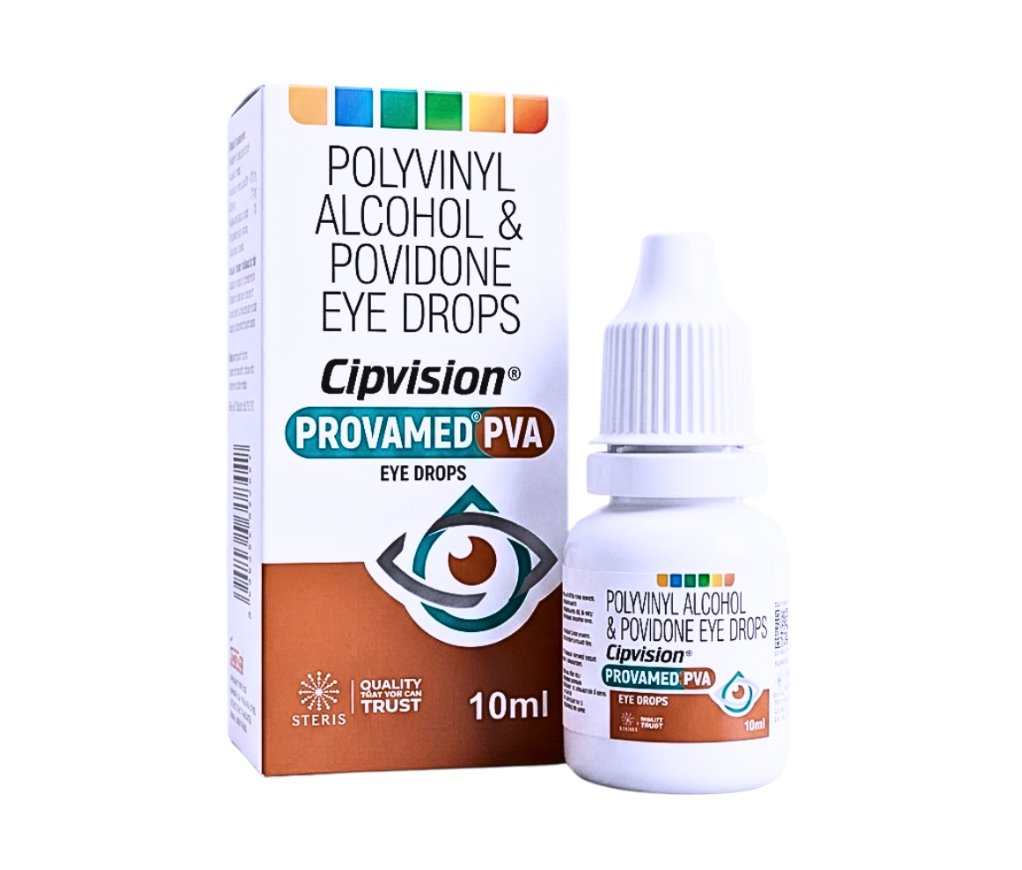
Your eyes rely on a thin tear film to stay comfortable, clear, and protected. When that film breaks down faster than it can be replenished—a condition broadly called dry eye—polyvinyl alcohol and povidone step in as artificial substitutes to restore comfort and protect the eye's surface.
Dry eye isn't just an annoyance. Left unmanaged, chronic dryness can lead to:
Persistent irritation and a "gritty" or burning sensation.
Blurred vision that comes and goes.
Increased sensitivity to light.
Higher risk of minor corneal abrasions from friction.
Discomfort that worsens with screen use, reading, or contact lens wear.
This is where lubricant eye drops matter—they're not just about temporary relief; they're about protecting the surface of your eye from ongoing mechanical stress caused by dryness.
Key Benefits of Polyvinyl Alcohol and Povidone Eye Drops
Immediate lubrication—the drops coat the eye surface quickly, easing burning and grittiness almost as soon as they're applied.
Extended moisture retention—polyvinyl alcohol has a naturally viscous quality that helps the tear film stay intact longer than water alone would.
Well-tolerated formulation—generally gentle on the eyes, making it suitable for regular, repeated use.
Contact lens compatibility—often recommended for lens wearers experiencing dryness (always confirm with your eye doctor regarding lens removal timing).
Non-blurring formula—unlike some thicker gel-based lubricants, this combination tends to cause less temporary blurring after application.
Supports eye surface protection—by keeping the surface moist, it reduces friction-related micro-irritation during blinking.
Mechanism of Action
Polyvinyl alcohol is a water-soluble polymer that increases the viscosity of the tear film, allowing it to spread evenly across the eye's surface and resist rapid evaporation. Povidone (povidone K-30 or similar grades used in ophthalmic formulations) complements this by adding additional lubricating and mucoadhesive properties, helping the film cling to the ocular surface a little longer.
Together, in the polyvinyl alcohol and povidone eye drop formulation:
Polyvinyl alcohol forms a thin, even layer over the cornea and conjunctiva, functioning similarly to the aqueous layer of natural tears.
Povidone enhances the retention time of this layer, reducing how often the drops need to be reapplied.
The combined viscosity slows tear evaporation, which is one of the most common underlying causes of dry eye discomfort.
Because the formulation doesn't rely on oil-based components, it typically doesn't cause the same greasy residue or blurred vision associated with some ointment-based alternatives.
This mechanism is why polyvinyl alcohol-based drops are frequently recommended as an accessible, well-tolerated option across mild-to-moderate dry eye cases—rather than reserved for a narrow clinical scenario.
Side Effects of Polyvinyl Alcohol and Povidone Eye Drops
Most people tolerate these eye drops well, with mild, temporary effects like brief stinging or blurred vision immediately after application being the most commonly reported.
Common, usually mild:
Brief stinging or a mild burning sensation upon instillation.
Temporary blurred vision for a few seconds after application.
Slight eye redness.
A feeling of mild stickiness around the eyelids.
Available Substitute
Carboxymethylcellulose (CMC) eye drops—another common artificial tear option.
Hydroxypropyl methylcellulose (HPMC) drops—similar lubricating mechanism.
Sodium hyaluronate eye drops—often used for more moderate-to-severe dryness.
Preservative-free artificial tears—recommended for patients using drops frequently throughout the day or those sensitive to preservatives.
Switching formulations should always be done with your ophthalmologist's or optometrist's guidance, particularly if your current drops aren't providing adequate relief.
Dosage Guidelines
The typical dose is 1–2 drops in the affected eye(s), 3–4 times daily, or as needed for symptom relief—though your eye doctor may adjust this based on severity.
How to apply correctly:
Wash your hands thoroughly before application.
Tilt your head back slightly and pull down the lower eyelid to form a small pocket.
Instill 1–2 drops into the pocket without letting the dropper tip touch your eye or eyelid.
Blink gently a few times to spread the solution evenly.
Avoid rubbing your eyes immediately after application.
If using other eye medications, wait at least 5 minutes between different drops.
Precautions & Warnings
Polyvinyl alcohol and povidone eye drops are generally safe for regular use, but a few precautions matter—particularly around contact lenses, contamination, and underlying eye conditions.
Contact lenses: Remove soft contact lenses before application unless your doctor specifically says otherwise; reinsert only after the recommended waiting period.
Avoid contamination: Never let the dropper tip touch your eye, fingers, or any surface, as this can introduce bacteria into the solution.
Don't share eye drops: Sharing increases infection risk between users.
Check for underlying conditions: If dryness persists beyond 72 hours despite regular use or worsens, see an eye specialist—it could indicate an underlying condition requiring different treatment.
Storage: Store as directed on the label, and discard the bottle after the recommended period once opened (commonly 4–6 weeks, but check your specific product label).
Pregnancy/breastfeeding: Generally considered low-risk given minimal systemic absorption, but confirm with your doctor if you have concerns.
Children: Use in children only under medical guidance.
Indications, Efficacy, and Clinical Evidence
Polyvinyl alcohol has been used in ophthalmic formulations for decades as a demulcent and lubricant, recognized for its ability to increase tear film viscosity and reduce evaporative water loss from the ocular surface. Povidone is similarly established as a mucoadhesive agent that extends the residence time of lubricating solutions on the eye.
Clinically, this combination is indicated for:
Symptomatic relief of dry eye syndrome (keratoconjunctivitis sicca)
Ocular discomfort due to reduced tear production
Protection of the corneal surface in cases of exposure-related dryness
Supportive lubrication during and after contact lens wear
General ocular comfort in environments with low humidity, high screen exposure, or prolonged visual tasks
While individual response varies, artificial tear formulations containing polyvinyl alcohol are widely regarded in ophthalmology as a well-tolerated, accessible first-line option before escalating to more specialized dry eye therapies.
Frequently Asked Questions
1. Is polyvinyl alcohol safe in eye drops?
Yes, polyvinyl alcohol is widely regarded as safe for ophthalmic use and has been used in lubricating eye drops for decades to relieve dryness and irritation.
2. What eye drops contain polyvinyl alcohol and povidone?
Formulations like CIPVISION PROVAMED PVA combine polyvinyl alcohol and povidone specifically for dry eye relief and ocular surface lubrication.
3. What is polyvinyl alcohol povidone?
It's a combination of two lubricating agents—polyvinyl alcohol, which increases tear film viscosity, and povidone, which extends how long the lubricating layer stays on the eye's surface.
4. What are polyvinyl alcohol and povidone eye drops used for?
They're used to relieve dry eye symptoms, ocular irritation, and discomfort caused by reduced natural tear production.
5. What are the safest eye drops to use daily?
Preservative-free artificial tear formulations, including polyvinyl alcohol-based drops, are generally considered safe for regular daily use, though you should confirm with your eye doctor if using them long-term.
6. What is another name for polyvinyl alcohol eye drops?
They're often referred to as "lubricant eye drops" or "artificial tears," with polyvinyl alcohol being one of several active demulcent ingredients used across different brands.
7. Can polyvinyl alcohol eye drops be used with contact lenses?
Yes, in most cases, but soft contact lenses should typically be removed before application unless your doctor advises otherwise.
8. How often can I use polyvinyl alcohol and povidone eye drops?
Most people can use them 3–4 times daily, or as needed, though your doctor may adjust this based on your symptoms.
9. Do polyvinyl alcohol eye drops cause blurred vision?
Mild, brief blurring is possible immediately after application but typically resolves within seconds to a minute.
10. Can I use these eye drops for red eyes?
They're primarily formulated for dryness and lubrication, not redness reduction. If redness is your main concern, consult your doctor for an appropriate product.
11. Are polyvinyl alcohol and povidone eye drops available without a prescription?
Many lubricant eye drop formulations are available over-the-counter, but always check your specific product's regulatory status and consult a pharmacist if unsure.
12. What is the price of polyvinyl alcohol eye drops?
Pricing varies by brand and bottle size. [PLACEHOLDER—insert CIPVISION PROVAMED PVA MRP and bottle size before publishing].
13. Can children use polyvinyl alcohol eye drops?
Only under medical guidance—consult a pediatrician or eye specialist before use in children.
14. How long can I use polyvinyl alcohol eye drops after opening the bottle?
Typically 4–6 weeks after opening, but always check the specific expiry guidance on your product label.
15. What happens if dry eye symptoms don't improve with these drops?
If symptoms persist beyond a few days of regular use or worsen, see an eye specialist, as this may indicate an underlying condition needing a different treatment approach.
Conclusion
Dry, irritated eyes aren't something to just push through—left unmanaged, they can affect your comfort, vision clarity, and even the health of your eye's surface over time. Polyvinyl alcohol and povidone eye drops offer a well-established, gentle way to restore moisture and comfort for everyday dryness, whether it's from screens, contact lenses, or environmental factors.
For Further Information:
Mail Us: contact@sterispharma.com or info@sterispharma.com
Call Now: +918824175417, +919982524671