

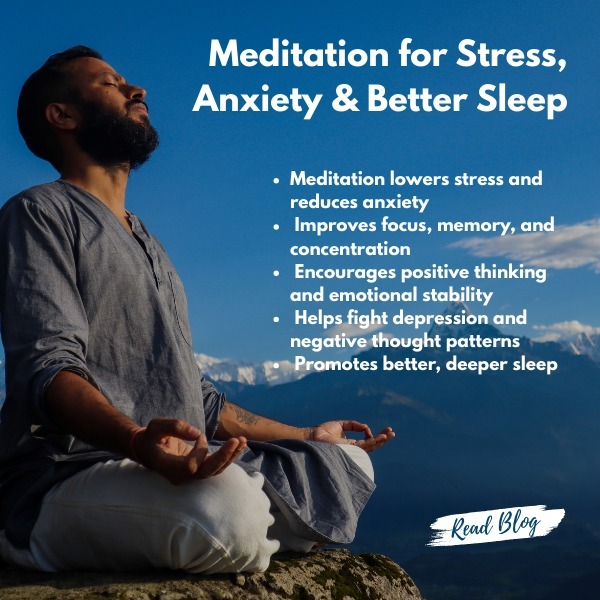
In today’s fast-paced,
technology-driven world, taking care of our mental health is more important
than ever. Many people face stress, anxiety, depression, and burnout because of
constant pressure from work, studies, financial challenges, or personal
responsibilities. While medication and therapy are essential for many, there’s
also a powerful natural practice that can improve mental
well-being: meditation.
Meditation is not a new concept—it has been
practiced for thousands of years across different cultures and traditions.
Today, scientific research confirms what ancient wisdom always knew: meditation
can transform the way we think, feel, and live. By dedicating just a few
minutes each day, we can experience profound benefits for our mental and
emotional health.
1. Stress Reduction –
Calming the Mind and Body
Stress is often called the “silent
killer,” as it can lead to serious physical and mental health problems. When
we’re stressed, our body releases cortisol, a hormone that keeps us in a
constant state of “fight or flight.” While useful in emergencies, high cortisol
levels over time can cause anxiety, insomnia, and even weaken the immune
system.
Meditation helps reduce cortisol
production, allowing the body and mind to relax. Breathing exercises and
mindfulness practices calm the nervous system, leading to lower heart rate,
reduced blood pressure, and a greater sense of inner peace. Many people who
meditate daily notice that stressful situations no longer affect them as
strongly as before.
2. Managing Anxiety and Negative
Thoughts
Anxiety often comes from worrying
about the future or overthinking situations we can’t control. Meditation
teaches us to live in the present moment
by focusing on the breath or a mantra. This practice breaks the cycle of
constant worrying and negative thinking.
Over time, meditation rewires the
brain to respond differently to stress. Instead of being overwhelmed by
thoughts, we learn to observe them without judgment and let them pass. This
helps reduce feelings of restlessness, panic, or fear.
3. Improving Emotional Well-Being
Meditation encourages positive
emotions such as compassion, gratitude, and contentment. Through practices like
loving-kindness meditation,
individuals develop greater empathy and kindness toward themselves and others.
This shift in perspective can improve relationships,
reduce anger, and increase overall life satisfaction. People who meditate
regularly often describe feeling more grounded, optimistic, and emotionally
balanced.
4. Sharpening Focus and Concentration
We live in a world of constant
distractions—smartphones, social media, and multitasking have reduced our
ability to concentrate. Meditation is like a workout for the brain. By training
the mind
to stay focused on one thing, such as the breath, it strengthens attention span
and improves memory.
Studies have shown that meditation can
even change the structure of the brain, increasing the thickness of areas
responsible for learning, focus, and emotional regulation. This makes meditation
especially beneficial for students, professionals, and anyone looking to boost
productivity.
5. Better Sleep and Relaxation
Millions of people struggle with
insomnia or poor sleep due to racing thoughts at night. Meditation helps
prepare the mind and body for deep rest by slowing down the thought process. Breathing
exercises, guided imagery, and body-scan meditations are particularly effective
for improving sleep quality.
When practiced regularly, meditation
not only helps people fall asleep faster but also improves the quality of rest,
leading to more energy and clarity during the day.
6. Helping with Depression and Mood
Disorders
Depression is often linked to
repetitive negative thinking patterns. Meditation, especially mindfulness-based practices, helps
break these patterns by encouraging individuals to observe their thoughts
without getting trapped in them.
Research has shown that mindfulness
meditation can be as effective as medication in preventing relapses of depression
in some cases. It also promotes self-acceptance and reduces self-criticism,
which are common in people with depression.
7. Enhancing Self-Awareness and
Personal Growth
One of the greatest gifts of
meditation is self-awareness. By observing our thoughts and emotions without
judgment, we begin to understand ourselves on a deeper level.
This awareness helps us recognize harmful habits,
thought patterns, and behaviors. With greater clarity, we can make better
decisions, respond instead of react, and move toward personal growth.
Meditation also deepens spiritual connection for those seeking meaning and
purpose in life.
8. Long-Term Mental Resilience
Unlike quick fixes, meditation builds mental resilience over time. Just like
physical exercise strengthens the body, meditation strengthens the mind.
Regular practice helps us stay calm during challenges, recover faster from
setbacks, and maintain inner peace even in chaotic situations.
This resilience makes a huge
difference in everyday life—whether it’s handling workplace stress, balancing
family responsibilities, or dealing with unexpected challenges.
How to Get Started with Meditation
If you are new to meditation, it’s
important to start small. Even 5–10
minutes a day can bring noticeable changes. Here are a few simple steps:
- Find a quiet space where you won’t be disturbed.
- Sit
comfortably, close your eyes, and take slow deep breaths.
- Focus on
your breathing—observe the inhale and exhale.
- If your
mind wanders, gently bring your attention back to the breath.
- Start with short sessions and gradually increase the duration.
You can also explore guided meditation
apps, YouTube sessions, or join local meditation groups for support.
Final Thoughts
Meditation is a simple yet powerful
tool for improving mental health. It reduces stress, anxiety, and depression
while enhancing focus, emotional stability, and overall well-being. Unlike
temporary solutions, meditation creates long-lasting changes in the brain and
fosters resilience in daily life.
By making meditation a part of your
daily routine, you are not just improving your mental health but also nurturing
a more peaceful, positive, and fulfilling life.
Remember: You don’t need to be perfect
or sit for hours to experience benefits. Even a few minutes of mindfulness each
day can bring remarkable results for your mind and soul.