
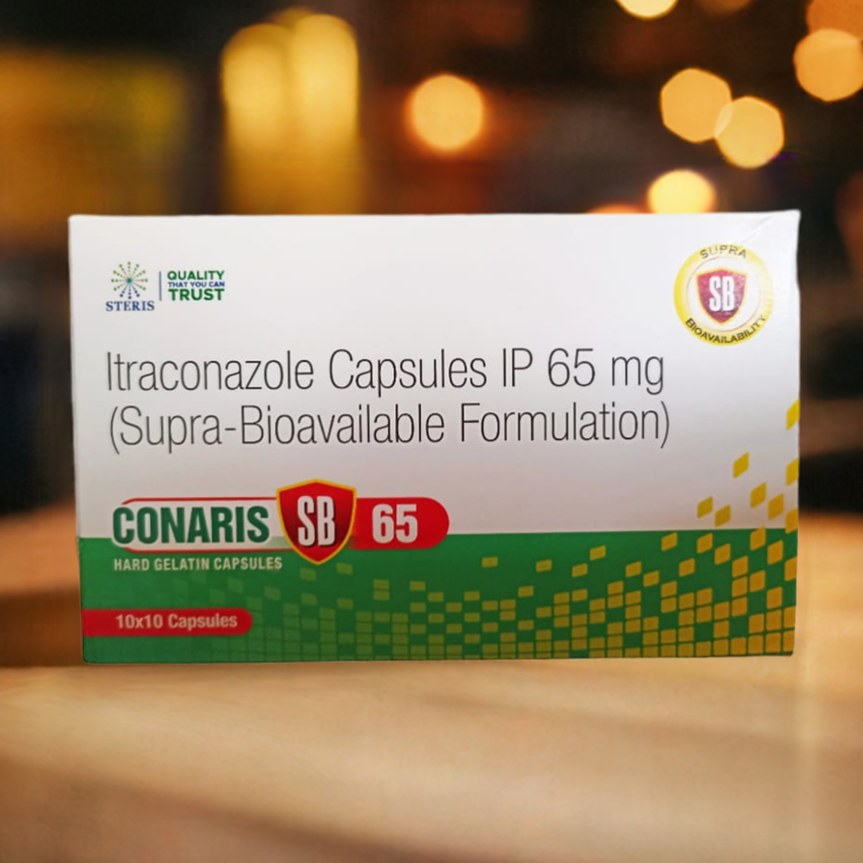
CONARIS SB 65 (Itraconazole 65mg): An In-Depth Guide to Uses, Dosage, and Side Effects
CONARIS SB 65, which contains Itraconazole 65mg, is a widely used antifungal medication belonging to the triazole class. Itraconazole is commonly prescribed to treat a variety of fungal infections, ranging from superficial skin infections to more serious systemic fungal diseases. Known for its broad spectrum of action, Itraconazole is highly effective against a range of fungi that cause infections in the skin, nails, lungs, and other internal organs.
What is CONARIS SB 65 (Itraconazole 65mg)?
CONARIS SB 65 is a branded formulation of Itraconazole at a dose of 65mg. Itraconazole works by inhibiting the growth of fungi. It does so by targeting the ergosterol synthesis pathway, a critical component of the fungal cell membrane. By disrupting this process, itraconazole compromises the integrity of the fungal cell membrane, leading to the death of the fungal cell.
Itraconazole is used to treat both cutaneous fungal infections (those affecting the skin, nails, and hair) and more systemic fungal infections (those affecting internal organs such as the lungs, heart, and bloodstream).
Uses of Itraconazole 65mg
Itraconazole 65mg is prescribed for the treatment of various fungal infections, including:
1. Onychomycosis (Fungal Nail Infection)
Itraconazole is commonly used to treat onychomycosis, a fungal infection of the nails. It is particularly effective against dermatophytes, the fungi that cause nail infections. Itraconazole 65mg is often used in pulse therapy, where the medication is taken for a short, intensive period followed by a break. This can help achieve effective outcomes with fewer side effects.
2. Dermatophytosis (Skin Infections)
Itraconazole is also effective for treating superficial skin infections caused by fungi, such as ringworm (tinea corporis), athlete’s foot (tinea pedis), and jock itch (tinea cruris). It is particularly helpful in cases where topical treatments have failed or when the infection is widespread.
3. Fungal Infections of the Lungs (Pulmonary Aspergillosis, Histoplasmosis)
Itraconazole is used to treat pulmonary fungal infections caused by Aspergillus species, which can lead to conditions like aspergillosis. It is also used to treat histoplasmosis, a fungal infection that typically affects the lungs, caused by the Histoplasma capsulatum fungus, often found in soil contaminated with bird or bat droppings.
4. Systemic Fungal Infections
Itraconazole is used for treating systemic fungal infections such as blastomycosis, coccidioidomycosis, and sporotrichosis. These infections often involve internal organs, including the lungs, skin, bones, and sometimes the central nervous system. Itraconazole helps control the spread of these infections and can be part of long-term therapy to prevent recurrence.
Itraconazole 65mg Dosage
The dosage of Itraconazole 65mg varies depending on the type and severity of the infection being treated, as well as the patient’s medical history and any other medications being taken. Below are general dosing guidelines:
For Onychomycosis (Nail Fungus)
- Adult Dose: The typical dosage for nail infections is 200mg per day, often given as pulse therapy. This involves taking 200mg of Itraconazole for one week every month for 2–3 months.
- Pediatric Dose: The dose for children is adjusted based on weight and the type of fungal infection, but usually falls within 5–10 mg/kg per day.
For Dermatophytosis (Skin Infections)
- Adult Dose: The recommended dose for skin infections like athlete’s foot or ringworm is usually 200mg per day for 2–4 weeks.
- For Tinea Pedis (Athlete\'s foot), the dose may be taken as 200mg daily for 7 days or 100mg daily for 14 days.
Side Effects of Itraconazole 65mg
Like all medications, Itraconazole 65mg can cause side effects, although not everyone will experience them. Most side effects are mild and manageable, but some can be more serious.
Common Side Effects:
- Nausea or Vomiting: Digestive discomfort, including nausea and vomiting, is common, especially when the medication is first started.
- Headache: Some patients may experience headaches during treatment.
- Diarrhea or Constipation: Digestive issues can occur, leading to either diarrhea or constipation.
- Abdominal Pain: Mild stomach discomfort may occur.
- Rash: A skin rash may develop, particularly during the initial phase of treatment.
- Dizziness: Some individuals report feeling lightheaded or dizzy, especially when standing up quickly.
Conclusion
CONARIS SB 65 (Itraconazole 65mg) is a powerful antifungal medication used to treat a wide variety of fungal infections, both superficial and systemic. It is most commonly prescribed for skin and nail fungal infections, as well as more serious fungal diseases like pulmonary aspergillosis and candidiasis. While Itraconazole is generally well-tolerated, it does come with a risk of side effects, particularly with prolonged use or in those with pre-existing conditions like liver or heart disease.