
Introduction
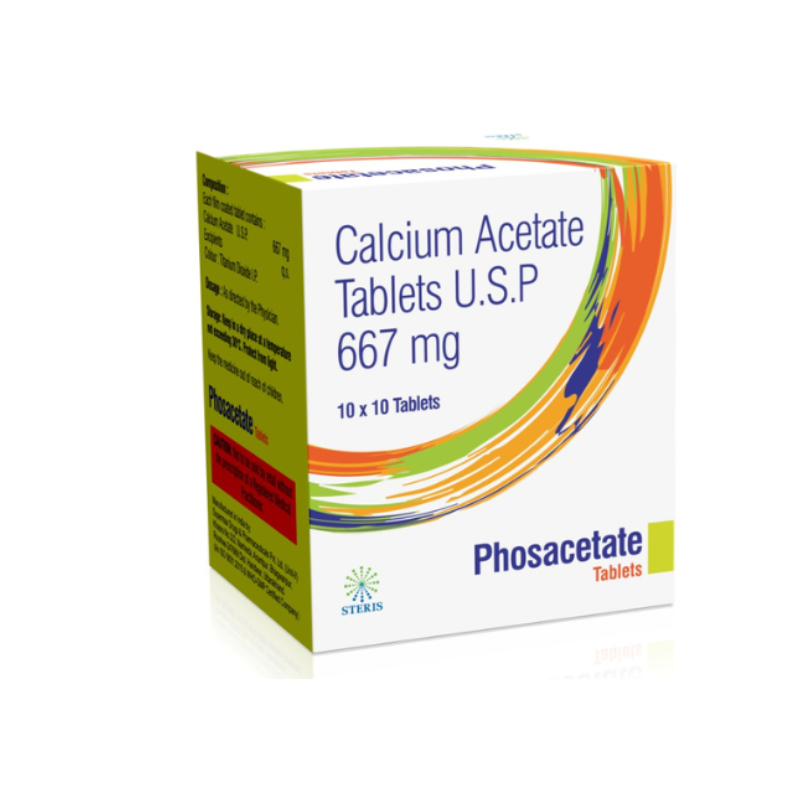
Maintaining proper mineral balance in the body is essential, especially for patients with chronic kidney disease or those on dialysis. PHOSACETATE contains Calcium Acetate 667mg, a phosphate binder that helps manage elevated blood phosphate levels. Elevated phosphate can lead to complications such as bone disorders, cardiovascular issues, and mineral imbalance. PHOSACETATE works by binding dietary phosphate in the gut, preventing its absorption into the bloodstream, and helping maintain optimal mineral balance. It is a trusted choice for patients requiring effective phosphate control while supporting overall kidney and bone health.
Uses
PHOSACETATE is primarily prescribed for:
Management of hyperphosphatemia (high blood phosphate levels) in patients with chronic kidney disease (CKD)
Patients on hemodialysis or peritoneal dialysis who are unable to maintain normal phosphate levels through diet alone
Prevention of phosphate-related complications, such as bone mineral disorders and vascular calcification
Supportive therapy in mineral and bone disorders associated with chronic kidney disease
This medication is intended to complement dietary phosphate restriction and should be used under medical supervision.
Benefits
PHOSACETATE offers several important therapeutic benefits:
Effective Phosphate Control – Binds dietary phosphate in the intestines to reduce absorption into the bloodstream.
Supports Bone Health – Helps prevent bone weakening and deformities associated with high phosphate levels.
Reduces Cardiovascular Risk – By controlling phosphate, it helps minimize vascular calcification in CKD patients.
Patient-Friendly Dosage – Convenient oral tablet that can be taken with meals for optimal phosphate binding.
Safe for Long-Term Use – Well-tolerated when used under medical supervision as part of CKD management.
Improves Overall Quality of Life – Helps reduce complications from hyperphosphatemia, supporting overall health in dialysis patients.
Dosage
The dosage of PHOSACETATE depends on individual patient requirements and should be strictly followed according to a doctor’s prescription:
Typical adult dose: One or more tablets with meals as directed by your physician
Swallow the tablet whole with water; do not crush or chew
The dosage may be adjusted based on blood phosphate levels and dietary phosphate intake
Regular monitoring of serum phosphate and calcium levels is recommended
Consistent use with meals maximizes phosphate binding and effectiveness
Side Effects
PHOSACETATE is generally well-tolerated, but some patients may experience:
Gastrointestinal disturbances such as nausea, constipation, diarrhea, or bloating
Rare allergic reactions such as rash or itching
Elevated blood calcium (hypercalcemia) if taken in excess or without medical supervision
Seek immediate medical attention if severe side effects such as persistent vomiting, severe abdominal pain, or signs of an allergic reaction occur.
Precautions and Warning
Do not use PHOSACETATE if allergic to Calcium Acetate or other ingredients in the tablet.
Patients with hypercalcemia should avoid excessive use and monitor calcium levels regularly.
Inform your doctor if you have kidney failure, heart disease, or other chronic conditions.
Use under strict medical supervision if taking other calcium supplements or vitamin D analogues.
Keep out of reach of children.
Store in a cool, dry place away from sunlight to maintain efficacy.
FAQs;
1. What is PHOSACETATE used for?
PHOSACETATE is used to manage high blood phosphate levels (hyperphosphatemia) in patients with chronic kidney disease, especially those on dialysis.
2. How does PHOSACETATE work?
It contains Calcium Acetate, which binds dietary phosphate in the gut, preventing its absorption into the bloodstream and helping maintain optimal mineral balance.
3. When should PHOSACETATE be taken?
PHOSACETATE should be taken with meals, as this maximizes phosphate binding and effectiveness.
4. Can PHOSACETATE cause side effects?
Mild gastrointestinal issues such as nausea, constipation, diarrhea, or bloating may occur. Rare allergic reactions or elevated calcium levels can happen in sensitive individuals.
5. Is PHOSACETATE safe for long-term use?
Yes, when taken under medical supervision, PHOSACETATE is safe for long-term use as part of chronic kidney disease management.
6. Can children take PHOSACETATE?
Use in children should only be under strict medical guidance. Pediatric dosing may differ from adults.
7. Can PHOSACETATE interact with other medications?
Yes, it may interact with other calcium supplements, phosphate binders, or vitamin D analogues. Always inform your doctor about all medicines being taken.
8. Can PHOSACETATE prevent kidney disease progression?
While PHOSACETATE helps control phosphate levels and reduce complications, it does not cure kidney disease but supports overall management and reduces risks associated with hyperphosphatemia.
9. How should PHOSACETATE be stored?
Store in a cool, dry place away from sunlight and keep out of reach of children to maintain safety and efficacy.
10. Where can I buy PHOSACETATE in India?
PHOSACETATE is available at licensed pharmacies and authorized online stores across India. Purchase from trusted sources to ensure authenticity.
Conclusion
PHOSACETATE (Calcium Acetate 667mg) is a highly effective phosphate binder designed for patients with chronic kidney disease and those on dialysis. By controlling elevated phosphate levels, it helps prevent bone disorders, vascular calcification, and other complications associated with hyperphosphatemia. Its patient-friendly oral tablet formulation ensures convenient and consistent use with meals, while its safety profile supports long-term therapy under medical supervision. PHOSACETATE is an essential part of kidney health management, improving patient quality of life and minimizing risks related to phosphate imbalance.