
Introduction
When it comes to organ transplant care, keeping your body from rejecting the new organ is a top priority. That’s where sirolimus 1mg steps in—a powerful and reliable immunosuppressive medication prescribed to help your body accept a transplanted organ and reduce immune-related complications.In this article, we’ll explore what sirolimus 1mg tablet is, how it works, its uses, safety information, and why patients across the world rely on it as a core part of their post-transplant recovery and treatment of specific rare diseases.What Is Sirolimus 1mg?
Sirolimus 1mg is an immunosuppressant that reduces the body’s immune response by inhibiting a protein known as mTOR (mammalian target of rapamycin). This protein is responsible for the activation of white blood cells (T and B cells) which can attack transplanted organs or tissues.The sirolimus tablet is commonly used in kidney transplant patients to prevent organ rejection. Its immune-suppressing action ensures the new organ is not targeted by the body’s natural defense mechanisms.Formulations like tab sirolimus 1mg are widely prescribed for long-term use and are designed to provide controlled and steady release of the medication for effective protection.Sirolimus 1mg Tablet Uses
Understanding sirolimus 1mg tablet uses is essential, especially if you or a loved one is starting this medication. The key uses include:1. Prevention of Organ Rejection
The most common use of sirolimus 1mg tablet is in kidney transplant recipients, where it prevents immune-mediated rejection of the new organ.
2. Treatment of Lymphangioleiomyomatosis (LAM)
This is a rare lung disease mainly affecting women. Sirolimus tablet helps reduce abnormal lung cell growth, easing symptoms and improving lung function.3. Potential Use in Certain Cancers and Autoimmune Conditions
Under clinical supervision, sirolimus 1mg may be used in select cases of cancer or autoimmune diseases due to its ability to limit abnormal cell growth and immune response.
Tab Sirolimus 1mg: How to Take It
Consistency is critical with tab sirolimus 1mg. It’s usually prescribed:Once daily, at the same time each day
With or without food, but stick to one method for consistent absorption
Dosage depends on body weight, medical condition, and co-administered drugs
Always follow your doctor’s instructions. The dose may be adjusted based on blood test results to ensure it stays in the therapeutic range.
Side Effects of Sirolimus 1mg Tablet
Like all medications, sirolimus 1mg tablet may cause side effects. These can range from mild to serious and vary between patients.Common Side Effects:
High cholesterol or triglyceride levels
Mouth ulcers
Acne or skin rashes
Diarrhea or constipation
Joint or muscle pain
Serious Side Effects (Seek medical help):
Signs of infection (fever, sore throat)
Breathing difficulty (rare but serious lung side effects)
Delayed wound healing
Liver or kidney problems
Regular blood tests are essential to monitor organ function and adjust the dose as needed.
How Sirolimus Tablet Works
The sirolimus tablet works by suppressing the immune system, primarily through inhibition of mTOR, which prevents immune cells from multiplying and attacking transplanted organs.This also explains why sirolimus 1mg may have anti-proliferative effects, making it useful in some cancer and inflammatory conditions under strict medical supervision.Why Patients Trust Sirolimus 1mg for Long-Term Care
Improves organ survival post-transplant
Reduces dependency on steroids and other immunosuppressants
Oral tablet form makes it easy to take daily
Well-studied and trusted across global transplant centers
May provide additional protection against post-transplant complications like fibrosis or cell overgrowth
Frequently Asked Questions
Q1: What is sirolimus used for?
A: Sirolimus 1mg is primarily used to prevent organ rejection in kidney transplant patients and to treat LAM, a rare lung condition. It may also be considered for use in select cancers and immune-related conditions.
Q2: Can I take sirolimus with other medications?
A: Yes, but it’s essential to inform your doctor about all medications and supplements to avoid harmful interactions.
Q3: Can I stop taking the sirolimus tablet once I feel better?
A: No. Never stop this medication without medical advice. Stopping suddenly may lead to organ rejection or a return of symptoms.
Q4: What should I avoid while taking sirolimus 1mg?
A: Avoid grapefruit products, which can affect drug absorption. Also, limit exposure to sunlight due to increased sun sensitivity.
Q5: How often will I need tests while on sirolimus 1mg?
A: Your doctor will schedule regular blood tests to check drug levels, kidney/liver function, and cholesterol.
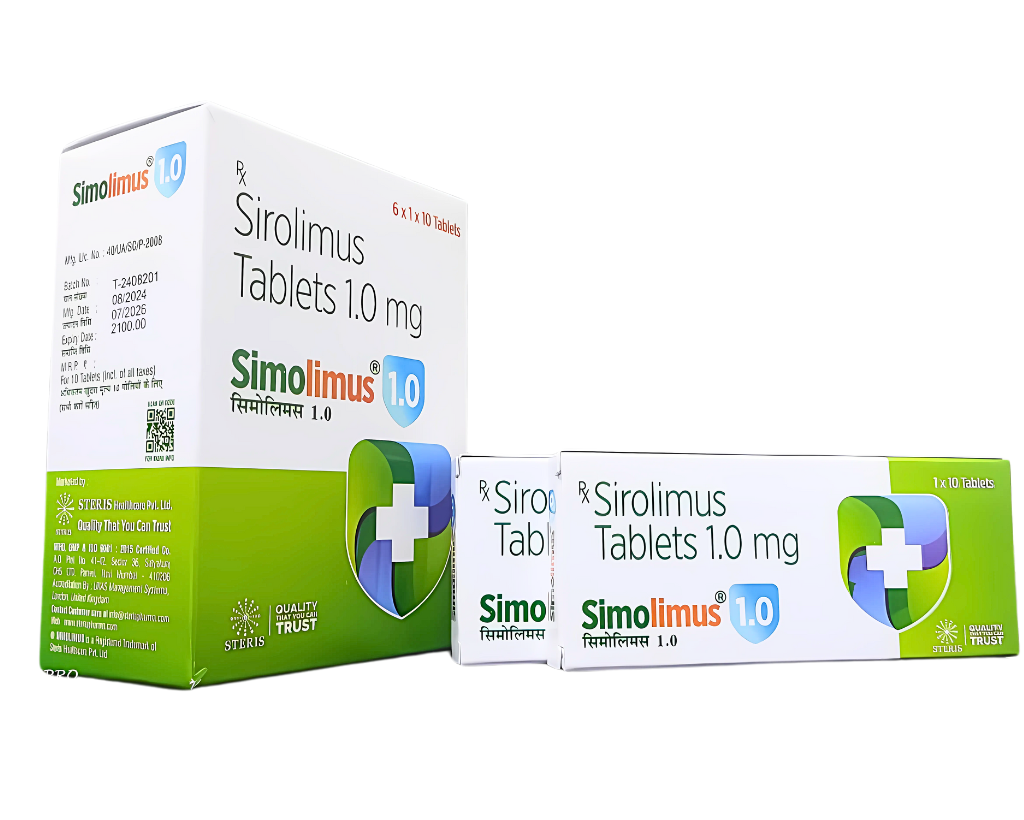
Why Choose SIMOLIMUS 1.0 by Steris Healthcare?
If you’re prescribed sirolimus 1mg, choosing a brand you can trust is critical. SIMOLIMUS 1.0 by Steris Healthcare stands out for:High-quality, pharmaceutical-grade sirolimus
Manufactured in WHO-GMP certified facilities
Backed by rigorous quality control
Supported by affordable pricing for long-term use
Trusted by doctors across hospitals and transplant centers
Conclusion
When your transplant or rare condition demands the highest level of immune support, sirolimus 1mg offers the protection you need. With SIMOLIMUS 1.0 from Steris Healthcare, you get a medication that’s clinically trusted, safe, and affordable—so you can focus on living well, every day.Speak to your doctor today about SIMOLIMUS 1.0 – and protect what matters most: your health.
Keywords
High-quality Sirolimus medication manufacturer
Steris Healthcare Sirolimus 1.0 brand
Sirolimus drug interactions and precautions
Post-transplant organ survival support
Side effects of Sirolimus 1mg tablet
Sirolimus cancer and autoimmune treatment
Sirolimus for rare lung disease LAM
Long-term immunosuppressive therapy kidney
Sirolimus 1mg dosage and administration
Kidney transplant organ rejection prevention