
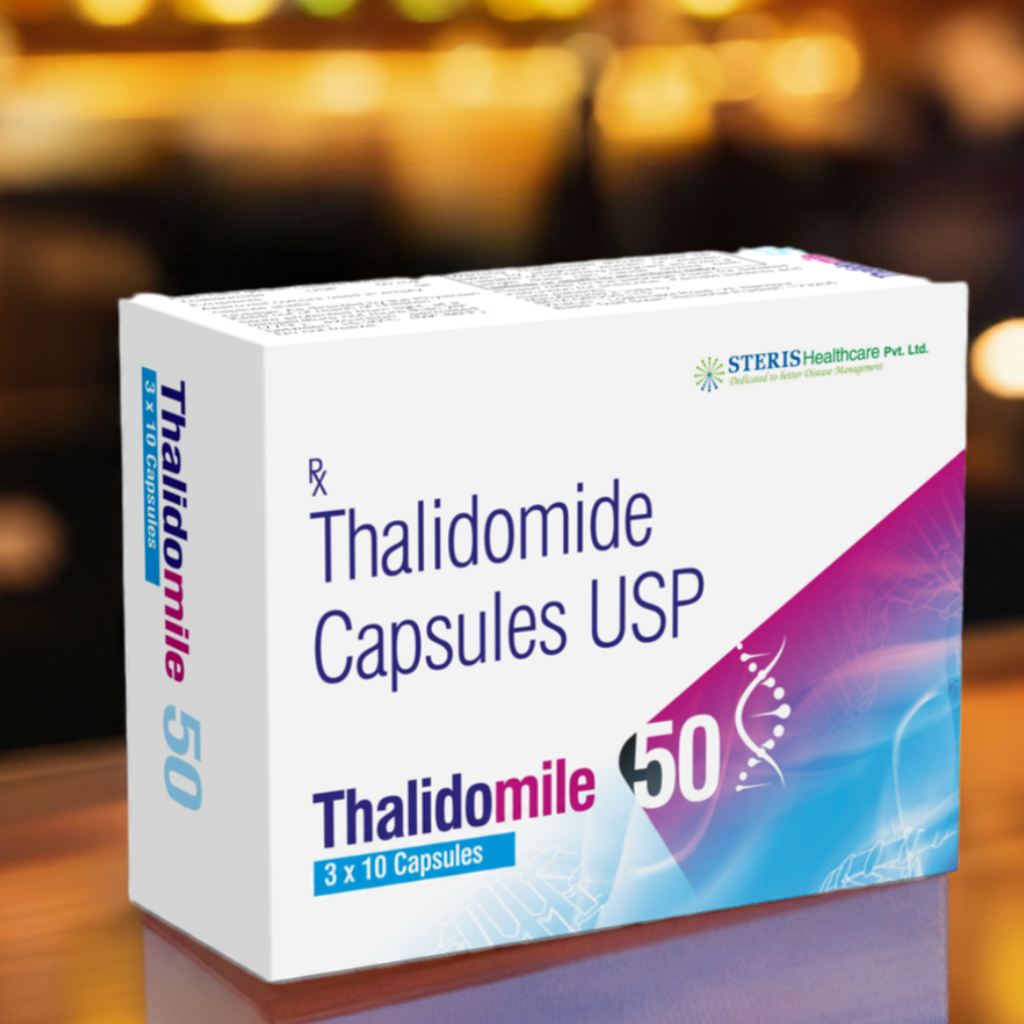
THALIDOMILE 50 (Thalidomide 50 mg): A Comprehensive Guide to Uses, Dosage, and Side Effects
THALIDOMILE 50, containing Thalidomide 50 mg, is a medication with a complex history and a variety of uses in modern medicine. Originally developed in the late 1950s as a sedative and sleep aid, Thalidomide was withdrawn from the market in the early 1960s after it was found to cause severe birth defects when taken by pregnant women. However, in recent decades, Thalidomide has found new applications in the treatment of various conditions, particularly in oncology and autoimmune disorders. Today, THALIDOMILE 50 is used under strict medical supervision to treat specific diseases such as multiple myeloma and leprosy-related complications, as well as certain inflammatory conditions.
This article provides a detailed look at THALIDOMILE 50 (Thalidomide 50 mg), covering its uses, recommended dosage, potential side effects, and important precautions for safe use.
What is THALIDOMILE 50 (Thalidomide 50 mg)?
THALIDOMILE 50 is an oral medication that contains Thalidomide 50 mg as its active ingredient. Thalidomide is a drug with immunomodulatory, anti-inflammatory, and anti-angiogenic properties. While its sedative properties were originally noted in the 1950s, Thalidomide is now primarily used to treat certain cancers and immune-mediated diseases.
Thalidomide works through multiple mechanisms:
- It modulates the immune system, reducing the activity of certain immune cells that contribute to inflammation and disease progression.
- It inhibits angiogenesis, which is the formation of new blood vessels. This property is particularly useful in preventing the growth of tumors in cancer treatments.
- Thalidomide also affects the immune response by influencing the production of cytokines, proteins that play a central role in immune system function and inflammation.
Key Uses of THALIDOMILE 50 (Thalidomide 50 mg)
THALIDOMILE 50 is prescribed to treat various conditions, particularly those involving the immune system or blood cell production. Some of its most common uses include:
1. Multiple Myeloma
Multiple myeloma is a type of cancer that affects the plasma cells in the bone marrow. It is a serious and potentially life-threatening condition that can cause bone pain, fatigue, infections, and kidney problems.
How it helps: Thalidomide is used as part of combination therapy to treat multiple myeloma. Its anti-cancer properties help inhibit the growth of cancer cells, while its ability to suppress the immune system can help reduce the production of abnormal plasma cells.
Effectiveness: Studies have shown that Thalidomide, when combined with other chemotherapy agents, significantly improves the treatment outcomes in multiple myeloma patients. It can reduce tumor growth and improve overall survival rates.
2. Erythema Nodosum Leprosum (ENL)
Erythema nodosum leprosum (ENL) is a complication of leprosy, an infectious disease caused by Mycobacterium leprae. ENL is characterized by painful skin lesions, fever, and inflammation, which can lead to severe disability if left untreated.
- How it helps: Thalidomide is effective in treating the inflammatory reaction seen in ENL. It reduces inflammation and promotes healing of the skin lesions, providing relief to patients with this condition. The immunomodulatory effects of Thalidomide help control the immune response associated with ENL flare-ups.
3. Other Autoimmune and Inflammatory Conditions
Thalidomide has also been used to treat autoimmune conditions such as cutaneous lupus erythematosus and other severe inflammatory diseases, particularly those that involve abnormal immune system activation and inflammation. It has been shown to reduce inflammation and manage symptoms associated with these conditions.
- How it helps: Thalidomide helps regulate the immune system by reducing the production of pro-inflammatory cytokines and inhibiting the activation of immune cells that cause tissue damage. This results in a reduction of symptoms and improved quality of life for patients suffering from chronic inflammatory conditions.
4. HIV-Related Conditions
Thalidomide has been explored as a treatment option for HIV-associated conditions, such as wasting syndrome and oral ulcers. In these cases, Thalidomide may help improve weight gain and alleviate discomfort caused by painful oral lesions, though it is not commonly used as a first-line treatment.
How to Take THALIDOMILE 50 (Thalidomide 50 mg)
The dosage of THALIDOMILE 50 varies based on the condition being treated, the patient\'s response to the medication, and other individual factors. Below are general guidelines for Thalidomide dosage, but always follow your healthcare provider’s instructions.
1. For Multiple Myeloma
- Starting dose: The typical starting dose for multiple myeloma is 50 mg once daily. Depending on the patient’s response and side effects, the dose may be adjusted.
- Maintenance dose: The dose may be increased gradually to 200 mg per day (or higher) as part of a combination regimen with other chemotherapy agents.
2. For Erythema Nodosum Leprosum (ENL)
- Starting dose: For treating ENL, the typical dose is 100 mg to 200 mg once daily.
- Maintenance dose: The dose may be reduced once the symptoms are controlled, but treatment may continue for several months.
3. For Autoimmune Conditions
For conditions like lupus or other severe inflammatory diseases, THALIDOMILE 50 is typically started at 50 mg to 100 mg per day. The dosage may vary depending on the severity of symptoms and response to therapy.
Important Notes:
- Missed Dose: If you miss a dose, take it as soon as you remember unless it is almost time for your next dose. Do not take two doses at once to make up for a missed dose.
- Consistent Timing: Take Thalidomide at the same time each day to help you remember. It can be taken with or without food.
Potential Side Effects of THALIDOMILE 50 (Thalidomide 50 mg)
Like all medications, THALIDOMILE 50 can cause side effects. While many people tolerate it well, it is important to be aware of the potential adverse effects, especially since Thalidomide has a history of serious side effects.
Common Side Effects:
- Drowsiness and Sedation: Thalidomide may cause drowsiness, dizziness, or a feeling of being lightheaded, particularly when starting the medication.
- Constipation: Thalidomide can slow down bowel movements and cause constipation in some patients.
- Peripheral Neuropathy: A tingling, numbness, or pain in the hands or feet may develop, which is a form of nerve damage (neuropathy).
- Fatigue: Many patients report feeling unusually tired or weak when taking Thalidomide.
Serious Side Effects:
- Birth Defects: Thalidomide is known to cause severe birth defects if taken during pregnancy. It is contraindicated in pregnant women, and women of childbearing potential must use strict contraception during treatment and for several months after discontinuation. Even male patients taking Thalidomide should avoid fathering a child during treatment due to potential risks.
- Deep Vein Thrombosis (DVT) and Pulmonary Embolism (PE): Thalidomide can increase the risk of blood clots, which can lead to deep vein thrombosis (DVT) or pulmonary embolism (PE), both of which can be life-threatening.
- Severe Neuropathy: In addition to mild peripheral neuropathy, long-term use of Thalidomide may cause more severe nerve damage. Symptoms like pain, numbness, and weakness should be monitored closely.
- Hematologic Issues: Thalidomide can cause changes in blood cell counts, leading to conditions like anemia or leukopenia, which can increase the risk of infections or bleeding.
- Rash: Some patients may develop a skin rash, which could indicate an allergic reaction or an adverse response to the medication.
Rare but Serious Reactions:
- Stevens-Johnson Syndrome (SJS): A rare but serious skin condition that causes blistering and peeling of the skin. This requires immediate medical attention.
- Liver Toxicity: Symptoms such as jaundice (yellowing of the skin or eyes), dark urine, or abdominal pain may indicate liver damage.
Conclusion
THALIDOMILE 50 (Thalidomide 50 mg) is a potent medication with important uses in the treatment of multiple myeloma, erythema nodosum leprosum, and other conditions involving inflammation and immune dysfunction. While it can provide significant therapeutic benefits, it also carries serious risks, particularly regarding birth defects and blood clot formation.
For further information
Email: info@sterispharma.com / contact@sterispharma.com
Call/WhatsApp: 7877551268, 7849827488