Amino Acid 7% injection 250 ML | STERIMIN NEPHRO 7% 250ML
Description
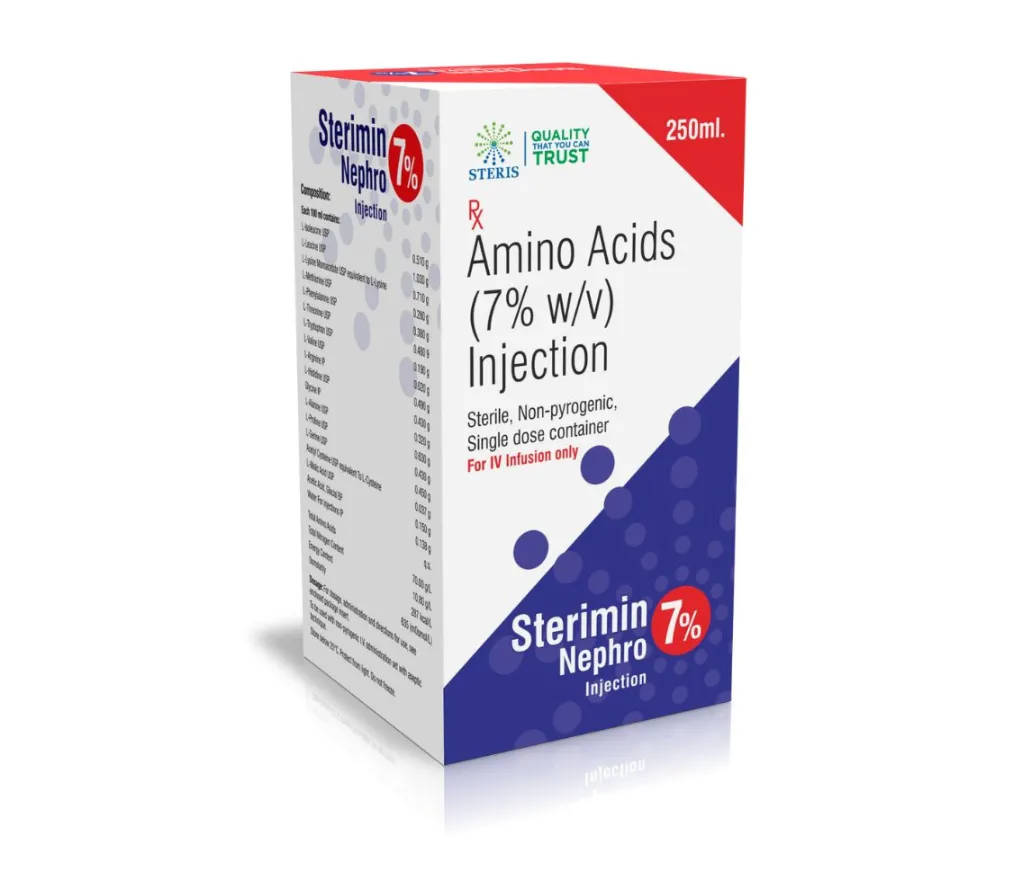
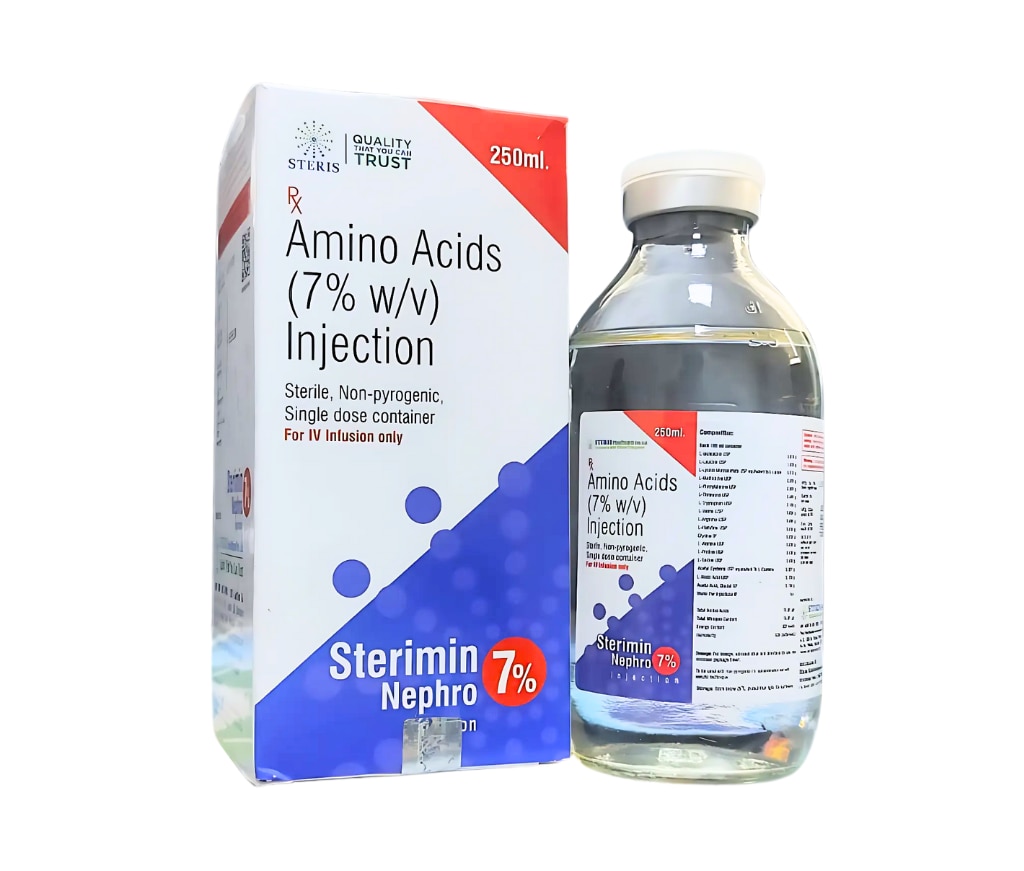
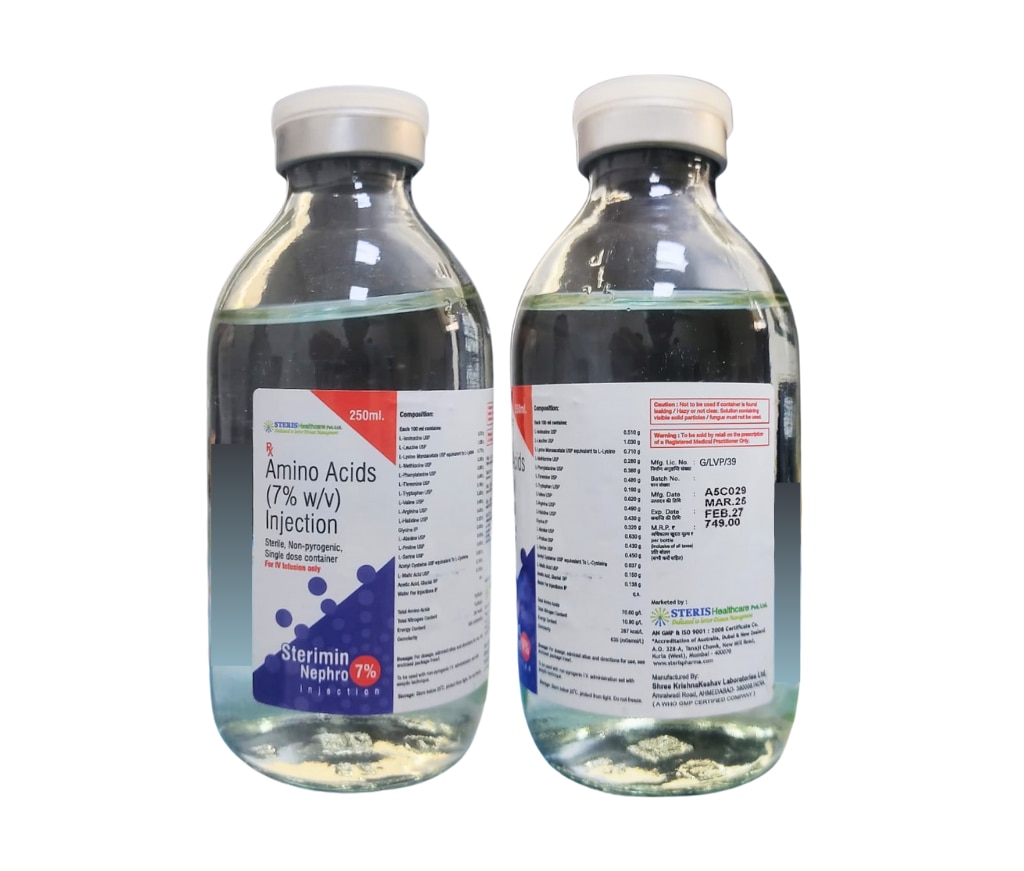
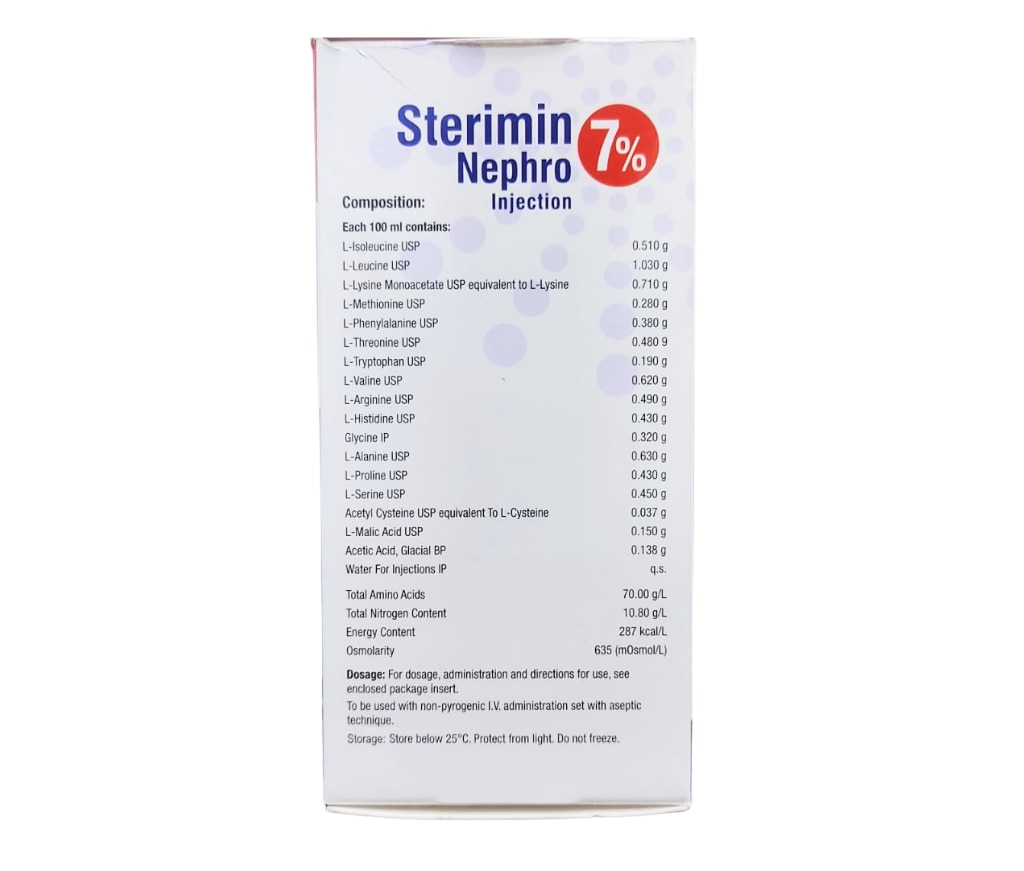
STERIMIN NEPHRO 7% is a sterile, clear solution formulated with a blend of essential and non-essential amino acids at a 7% concentration. It is specially designed to meet the elevated protein and nutritional requirements in patients suffering from renal impairment or those undergoing dialysis. Administered intravenously, STERIMIN NEPHRO 7% helps in maintaining nitrogen balance, supporting tissue repair, and enhancing overall metabolic function in critically ill patients. This infusion plays a vital role in preventing or correcting protein-energy malnutrition, especially when oral intake is not sufficient or feasible.
Amiseven 7% Injection are organic compounds that are chained together to form proteins. It is used to treat nutritional deficiencies. It promotes nitrogen-balancing in the body, also replenishes the protein reserve of the body in extensive burns or protein-calorie malnutrition.
What is STERIMIN NEPHRO 7%?
STERIMIN NEPHRO 7% is an amino acid injection containing a 7% solution of various amino acids essential for protein synthesis and metabolic stability. These amino acids serve as the building blocks for protein in the body, necessary for muscle repair, enzyme function, hormone production, and immune defense. This injection is administered intravenously, ensuring rapid absorption and utilization by the body, particularly in patients who are unable to eat or absorb nutrients normally.
Uses of STERIMIN NEPHRO 7%
STERIMIN NEPHRO 7% is primarily used in clinical settings for:
Managing protein and amino acid deficiencies in patients with kidney disease
Supporting nutritional needs during dialysis or catabolic stress
Replenishing amino acids in patients with extensive burns or trauma
Treating protein-calorie malnutrition
Providing supplemental nutrition when oral or enteral nutrition is inadequate
This formulation ensures that patients with limited renal function receive the necessary amino acids without overburdening the kidneys, making it suitable for those undergoing conservative management or dialysis.
Side Effects of STERIMIN NEPHRO 7%
Although generally well-tolerated, some patients may experience side effects, especially if the infusion is administered too quickly or without proper monitoring. Common side effects may include:
Nausea or vomiting
Chills or fever
Localized pain or redness at the injection site
Electrolyte imbalances
Hyperammonemia in patients with liver dysfunction
Hypersensitivity or allergic reactions in rare cases
Close monitoring of biochemical parameters is recommended during therapy to avoid complications.
Precautions Before Using STERIMIN NEPHRO 7%
Before administering STERIMIN NEPHRO 7%, it is important to evaluate the patient’s overall metabolic and renal status. Consider the following precautions:
Ensure proper fluid and electrolyte balance before infusion
Use with caution in patients with liver dysfunction, metabolic acidosis, or congestive heart failure
Avoid use in patients with known hypersensitivity to any amino acid component
Monitor nitrogen balance and blood urea levels regularly
Not intended for use in neonates unless prescribed specifically
Dosage should be individualized according to the patient’s clinical condition, protein requirements, and renal function.
Drug Interactions: What Drugs Interact with STERIMIN NEPHRO 7%?
STERIMIN NEPHRO 7% may interact with other medications that affect protein metabolism or electrolyte balance. These include:
Corticosteroids or anabolic steroids, which may influence nitrogen retention
Diuretics or nephrotoxic drugs, which may worsen renal function
Liver enzyme-inducing agents that may alter amino acid metabolism
Other IV nutrition or electrolyte solutions—should be carefully coordinated to avoid imbalance
It is advisable to consult with a healthcare provider to ensure compatibility with the full parenteral nutrition regimen and avoid adverse interactions.
Conclusion
STERIMIN NEPHRO 7% (Amino Acids Injection 7%) is a vital therapeutic solution designed to support the metabolic and nutritional needs of patients with renal impairment and severe malnutrition. By supplying essential amino acids, it helps restore protein balance, supports recovery in critical conditions, and ensures adequate nutrition when oral intake is compromised. When used under medical supervision with appropriate monitoring, it can significantly improve patient outcomes, especially in hospital and critical care settings.