
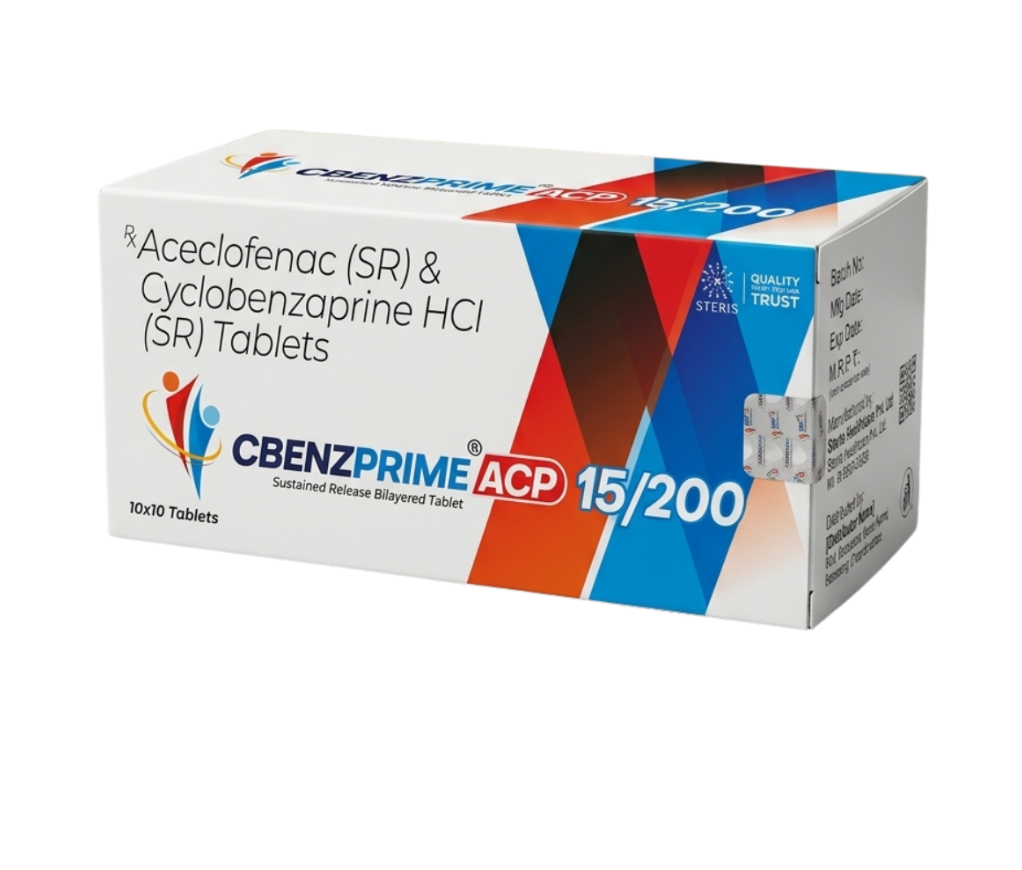
Aceclofenac Cyclobenzaprine Hydrochloride Tablets are a prescription combination used for selected painful musculoskeletal conditions where pain, inflammation, stiffness and muscle spasm occur together. The combination brings together aceclofenac, an NSAID that helps reduce pain and inflammation, and cyclobenzaprine hydrochloride, a centrally acting muscle relaxant used for short-term relief of painful muscle spasms.
A commonly marketed sustained-release formulation contains Aceclofenac SR 200 mg + Cyclobenzaprine HCl SR 15 mg, although the exact strength and release formulation can vary by product. Official Indian regulatory documentation has also listed the 200 mg aceclofenac + 15 mg cyclobenzaprine sustained-release combination.
What Are Aceclofenac Cyclobenzaprine Hydrochloride Tablets?
Aceclofenac Cyclobenzaprine Hydrochloride Tablets are designed to address two important components of musculoskeletal discomfort:
Aceclofenac: an NSAID that reduces pain and inflammation by affecting cyclooxygenase-related prostaglandin pathways.
Cyclobenzaprine hydrochloride: a skeletal muscle relaxant that helps reduce painful muscle spasm and associated stiffness.
This dual-action approach can be particularly relevant when pain is accompanied by muscle tightness, spasms or restricted movement. The medicine is generally prescribed for short-term use in appropriate patients and should be taken according to a healthcare professional's directions.
Aceclofenac Cyclobenzaprine Hydrochloride Tablets Uses
Doctors may prescribe this combination for selected musculoskeletal conditions involving pain and muscle spasm, such as:
Acute muscular pain with painful spasms
Back pain associated with muscle spasm
Neck pain and stiffness
Muscle strains and sprains
Certain painful musculoskeletal injuries
Painful muscle stiffness
Selected inflammatory musculoskeletal conditions when muscle spasm is also present
Aceclofenac itself is used for pain and inflammation associated with conditions such as osteoarthritis, rheumatoid arthritis and ankylosing spondylitis, while cyclobenzaprine is generally used short-term for muscle spasms related to strains, sprains and injuries.
Important: This combination is not appropriate for every type of pain. A doctor should determine whether both an anti-inflammatory medicine and a muscle relaxant are suitable for the patient's condition.
How Do Aceclofenac Cyclobenzaprine Hydrochloride Tablets Work?
The two ingredients work through different mechanisms.
Aceclofenac Action
Aceclofenac belongs to the NSAID class. It helps reduce the production of prostaglandins involved in pain and inflammation. This can help decrease pain, swelling and inflammatory discomfort.
Cyclobenzaprine Action
Cyclobenzaprine acts centrally to reduce excessive skeletal-muscle activity associated with acute muscle spasm. It can help relieve muscle tightness, painful spasms and restricted movement.
Together, these effects may provide broader relief when musculoskeletal pain involves both inflammation and muscle spasm.
Key Benefits of Aceclofenac Cyclobenzaprine Hydrochloride Tablets
1. Helps Relieve Musculoskeletal Pain
Aceclofenac helps control pain associated with inflammation, making the combination useful when painful musculoskeletal conditions require anti-inflammatory treatment.
2. Helps Reduce Muscle Spasm
Cyclobenzaprine provides muscle-relaxant activity and can help reduce painful muscle spasms associated with acute strains, sprains and injuries.
3. Addresses Pain and Stiffness Together
When muscle spasm contributes to discomfort, treating inflammation and muscle tightness simultaneously may help improve comfort and movement.
4. May Support Improved Mobility
As pain and muscle spasm decrease, movement can become easier. Medication is commonly used alongside appropriate rest and physical therapy where clinically indicated.
5. Sustained-Release Options May Provide Extended Drug Release
Some formulations are manufactured as sustained-release or bilayered tablets, such as Aceclofenac SR 200 mg + Cyclobenzaprine HCl SR 15 mg. The formulation should be swallowed exactly as directed and should not be altered unless the product information specifically permits it.
Aceclofenac Cyclobenzaprine Hydrochloride Tablets Side Effects
Like other prescription medicines, this combination can cause side effects. Commonly reported effects may include:
Drowsiness or sleepiness
Dizziness
Dry mouth
Nausea
Indigestion or stomach discomfort
Diarrhea
Headache
Cyclobenzaprine can cause drowsiness or dizziness, while aceclofenac and other NSAIDs can cause gastrointestinal discomfort.
Serious Symptoms Requiring Medical Attention
Seek prompt medical attention if symptoms such as the following occur:
Severe or persistent stomach pain
Vomiting blood
Black or tarry stools
Facial, lip or throat swelling
Difficulty breathing
Severe allergic reactions
Yellowing of the skin or eyes
NSAIDs can be associated with serious gastrointestinal, cardiovascular, kidney and allergic risks in susceptible patients.
Precautions Before Taking Aceclofenac Cyclobenzaprine Hydrochloride Tablets
Tell your doctor if you have a history of:
Stomach ulcers or gastrointestinal bleeding
Kidney disease
Liver disease
Heart disease or heart failure
Asthma or previous NSAID-related allergic reactions
Pregnancy or breastfeeding
Patients should also disclose all medicines and supplements they are taking because NSAIDs and muscle relaxants can have clinically important interactions.
Avoid alcohol unless your healthcare professional specifically advises otherwise. Alcohol may increase drowsiness associated with cyclobenzaprine and may increase certain risks associated with NSAID treatment.
Because cyclobenzaprine may cause drowsiness or dizziness, avoid driving, operating machinery or performing activities requiring alertness until you know how the medicine affects you.
How to Take Aceclofenac Cyclobenzaprine Hydrochloride Tablets
Take the medicine only according to the prescription and product-specific directions. Do not increase the dose or duration yourself.
If the prescribed product is a sustained-release formulation, swallow the tablet whole with water unless your product's prescribing information states otherwise. Do not crush or chew an extended-release tablet without professional advice.
Taking aceclofenac-containing medicines with food may help reduce stomach discomfort, but the exact administration instructions should follow the prescription and product label.
Buyer Intent: How to Choose Aceclofenac Cyclobenzaprine Hydrochloride Tablets
People searching for “aceclofenac cyclobenzaprine hydrochloride tablets,” “aceclofenac cyclobenzaprine tablets price,” “aceclofenac 200 mg cyclobenzaprine 15 mg,” “buy aceclofenac cyclobenzaprine tablets,” or “aceclofenac cyclobenzaprine tablets uses” may be researching either treatment information or purchasing options.
Before purchasing, verify:
Exact composition and strength
Immediate-release or sustained-release formulation
Manufacturer and product authorization
Batch number and expiry date
Packaging integrity
Prescription requirements
Authentic pharmacy or authorized supplier
Do not select a medicine solely because it has a lower price. Two products with similar names may have different strengths, release technologies or compositions.
For pharmaceutical buyers, distributors and healthcare businesses, product specifications, regulatory documentation, manufacturing standards, pack size and supply reliability should also be checked before procurement.
E-E-A-T & Responsible Medicine Information
High-quality pharmaceutical content should distinguish between what the medicine is prescribed for and what it is guaranteed to do. Aceclofenac is an NSAID used for pain and inflammation, while cyclobenzaprine is a muscle relaxant generally used for short-term muscle-spasm relief. Evidence and prescribing recommendations should therefore be interpreted according to the specific patient, diagnosis, formulation and dosage.
This combination should not be promoted as a universal solution for every form of back pain, arthritis or muscle discomfort. Medical supervision is particularly important when a patient has underlying kidney, liver, cardiovascular or gastrointestinal problems or takes multiple medicines.
Conclusion
Aceclofenac Cyclobenzaprine Hydrochloride Tablets combine an anti-inflammatory pain reliever with a centrally acting muscle relaxant, making the combination relevant to selected musculoskeletal conditions involving pain, inflammation, stiffness and painful muscle spasm. A commonly marketed formulation is Aceclofenac SR 200 mg with Cyclobenzaprine HCl SR 15 mg, but consumers should always confirm the strength and release formulation on their specific product label.
The medicine can help relieve pain and muscle spasm, but it is a prescription treatment and should be used according to medical advice. Buyers should verify the composition, manufacturer, authenticity, expiry date and dosage instructions before purchase. Patients should also understand potential adverse effects—particularly gastrointestinal problems, dizziness and drowsiness—and seek medical attention for serious symptoms.
Frequently Asked Questions
1. What are Aceclofenac Cyclobenzaprine Hydrochloride Tablets used for?
Aceclofenac Cyclobenzaprine Hydrochloride Tablets are used for selected musculoskeletal conditions involving pain, inflammation, stiffness and painful muscle spasms. Aceclofenac addresses pain and inflammation, while cyclobenzaprine helps reduce muscle spasm.
2. What are the benefits of aceclofenac and cyclobenzaprine tablets?
The combination can help reduce musculoskeletal pain and inflammation while relaxing painful muscle spasms, potentially making movement more comfortable in appropriate patients.
3. What are the side effects of Aceclofenac Cyclobenzaprine Hydrochloride Tablets?
Common side effects can include drowsiness, dizziness, dry mouth, nausea, indigestion and stomach discomfort. Serious symptoms such as black stools, vomiting blood, severe stomach pain or difficulty breathing require prompt medical attention.
4. Can Aceclofenac Cyclobenzaprine Tablets make you sleepy?
Yes. Cyclobenzaprine can cause drowsiness or dizziness. Avoid driving or operating machinery until you know how the medicine affects you. Alcohol can further increase drowsiness.
5. Can I take Aceclofenac Cyclobenzaprine Tablets for back pain?
They may be prescribed for certain types of acute back pain associated with muscle spasm, but the cause of back pain should be assessed by a healthcare professional before treatment. Cyclobenzaprine is generally used short-term for painful muscle spasms.
6. Can Aceclofenac Cyclobenzaprine Tablets be taken with food?
Aceclofenac-containing medicines are often taken with food to help reduce stomach discomfort, but patients should follow the specific instructions provided by their doctor and the product label.
7. Is Aceclofenac Cyclobenzaprine a muscle relaxant?
The combination contains both an NSAID and a muscle relaxant. Aceclofenac is the anti-inflammatory pain-relieving component, while cyclobenzaprine is the muscle-relaxant component.
8. Can I buy Aceclofenac Cyclobenzaprine Hydrochloride Tablets online?
Where legally available, these tablets may be listed by licensed pharmacies or authorized pharmaceutical suppliers. Before purchasing, check the exact strength, formulation, manufacturer, batch number and expiry date, and follow applicable prescription requirements.
9. How long can I take Aceclofenac Cyclobenzaprine Tablets?
The appropriate duration depends on the diagnosis and individual patient factors. Cyclobenzaprine is generally intended for short-term treatment of acute muscle spasms, while aceclofenac duration should be kept according to the prescriber's instructions.
10. Can I drink alcohol while taking Aceclofenac Cyclobenzaprine Tablets?
It is best to avoid alcohol unless your healthcare professional specifically says it is safe. Alcohol can increase cyclobenzaprine-related drowsiness and may increase certain gastrointestinal risks associated with NSAID treatment.