
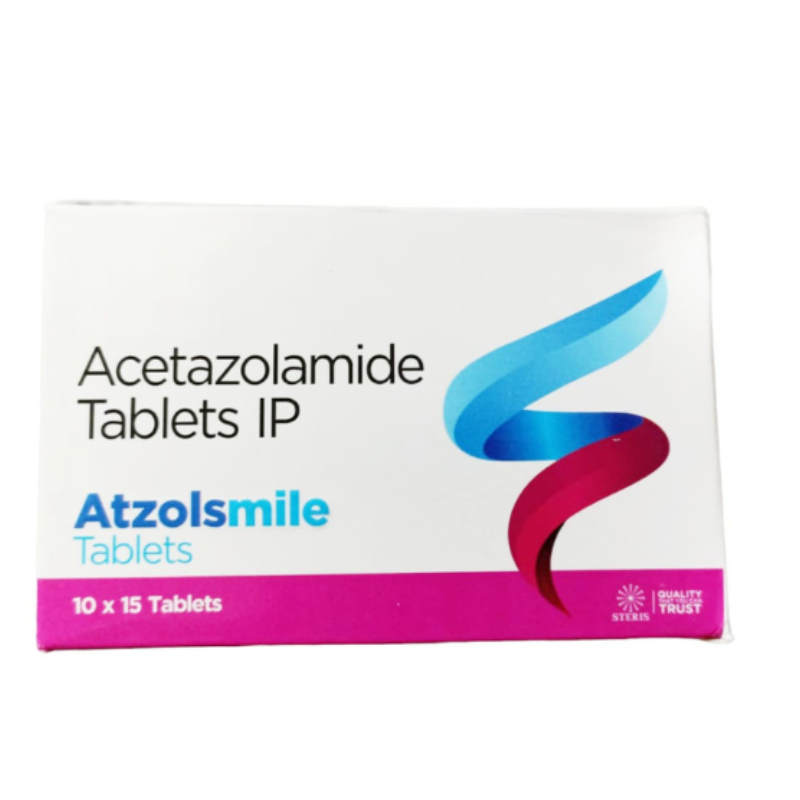
ATZOLSMILE 250 is a prescription medicine containing Acetazolamide 250 mg, a carbonic anhydrase inhibitor widely used in clinical practice for the management of conditions related to abnormal fluid accumulation, raised intraocular pressure, and certain neurological and respiratory disorders. Acetazolamide has been used for decades and is supported by extensive clinical evidence for its effectiveness and safety when used under medical supervision.
Acetazolamide works by reducing the activity of the enzyme carbonic anhydrase, which plays a key role in fluid secretion and acid–base balance in the body. By inhibiting this enzyme, ATZOLSMILE 250 helps decrease the production of aqueous humor in the eyes, reduces cerebrospinal fluid formation, and promotes diuresis (increased urine output). Due to these mechanisms, it is commonly prescribed in conditions such as glaucoma, altitude sickness, epilepsy (as adjunct therapy), and edema associated with heart failure or certain medications.
ATZOLSMILE 250 is trusted by healthcare professionals for its predictable action, oral convenience, and well-established role in managing multiple clinical conditions.
Uses
ATZOLSMILE 250 is indicated for a variety of medical conditions where regulation of fluid balance and pressure is required.
Primary Uses of ATZOLSMILE 250:
Treatment of glaucoma, including open-angle and secondary glaucoma
Reduction of intraocular pressure before and after eye surgery
Prevention and treatment of acute mountain (altitude) sickness
Adjunct therapy in certain types of epilepsy
Management of edema (fluid retention) related to heart failure or drug therapy
Treatment of idiopathic intracranial hypertension (raised brain pressure)
Correction of specific acid–base imbalances
ATZOLSMILE 250 is usually prescribed as part of a comprehensive treatment plan and should be taken strictly as advised by a physician.
Benefits
ATZOLSMILE 250 offers multiple therapeutic benefits due to its targeted mechanism of action.
1. Effectively Reduces Eye Pressure
By lowering aqueous humor production, ATZOLSMILE 250 helps control raised intraocular pressure, thereby reducing the risk of optic nerve damage in glaucoma patients.
2. Helps Prevent Altitude Sickness
Acetazolamide improves breathing and oxygen utilization at high altitudes, helping reduce symptoms such as headache, nausea, and fatigue associated with altitude sickness.
3. Promotes Controlled Diuresis
ATZOLSMILE 250 increases urine output, helping eliminate excess fluid from the body in conditions like edema, without causing excessive electrolyte imbalance when monitored properly.
4. Supports Neurological Conditions
In epilepsy and intracranial pressure disorders, Acetazolamide helps regulate fluid dynamics in the brain, supporting better symptom control.
5. Improves Acid–Base Balance
The medicine helps correct certain metabolic imbalances by altering bicarbonate excretion, which can be beneficial in specific clinical conditions.
6. Oral Convenience
The tablet form allows easy administration and consistent dosing, improving patient compliance.
7. Clinically Proven Molecule
Acetazolamide has extensive clinical usage and is included in standard treatment guidelines for multiple indications.
Dosage
The dosage of ATZOLSMILE 250 should always be individualized based on the patient’s age, medical condition, severity of symptoms, and response to therapy.
General Dosage Guidelines:
Usually one tablet (250 mg) one to four times daily, depending on the indication
Can be taken with or without food
For altitude sickness, treatment is often started 1–2 days before ascent
Dosage adjustments may be required in long-term therapy
The duration of therapy depends on the underlying clinical condition and patient response. Patients should not alter the dose or stop the medicine without consulting their doctor.
Side Effects
Like all medicines, ATZOLSMILE 250 may cause side effects in some individuals, although many patients tolerate it well.
Common Side Effects:
Increased urination
Tingling sensation in hands or feet
Loss of appetite
Altered taste sensation
Nausea or mild stomach discomfort
Less Common but Important Side Effects:
Electrolyte imbalance
Fatigue or drowsiness
Skin rash
Kidney stone formation (with prolonged use)
Most side effects are dose-dependent and reversible. Patients should seek medical advice if symptoms are severe or persistent.
Precautions and Warning
Certain precautions should be taken to ensure the safe use of ATZOLSMILE 250.
Important Precautions:
Inform your doctor if you have kidney disease, liver disease, or electrolyte imbalance
Use with caution in patients with diabetes or respiratory disorders
Regular monitoring of electrolytes and kidney function is advised during long-term therapy
Avoid dehydration; maintain adequate fluid intake unless otherwise directed
Pregnancy and Breastfeeding:
ATZOLSMILE 250 should be used during pregnancy or breastfeeding only if clearly prescribed by a doctor
Drug Interactions:
May interact with other diuretics, antiepileptic drugs, and salicylates
Always inform your healthcare provider about all medicines you are taking
Driving and Machinery:
The medicine may cause dizziness or drowsiness in some patients; caution is advised while driving
Storage Instructions:
Store in a cool, dry place
Protect from moisture and heat
Keep out of reach of children
Conclusion
ATZOLSMILE 250, containing Acetazolamide 250 mg, is a versatile and clinically trusted medication used in the management of glaucoma, altitude sickness, edema, epilepsy, and raised intracranial pressure. Its ability to regulate fluid secretion, reduce pressure, and maintain acid–base balance makes it an essential therapeutic option in multiple medical conditions.
With proper dosing, regular monitoring, and medical supervision, ATZOLSMILE 250 provides effective symptom control while maintaining a favorable safety profile. Its oral tablet form ensures ease of use and reliable absorption, supporting better treatment adherence.