

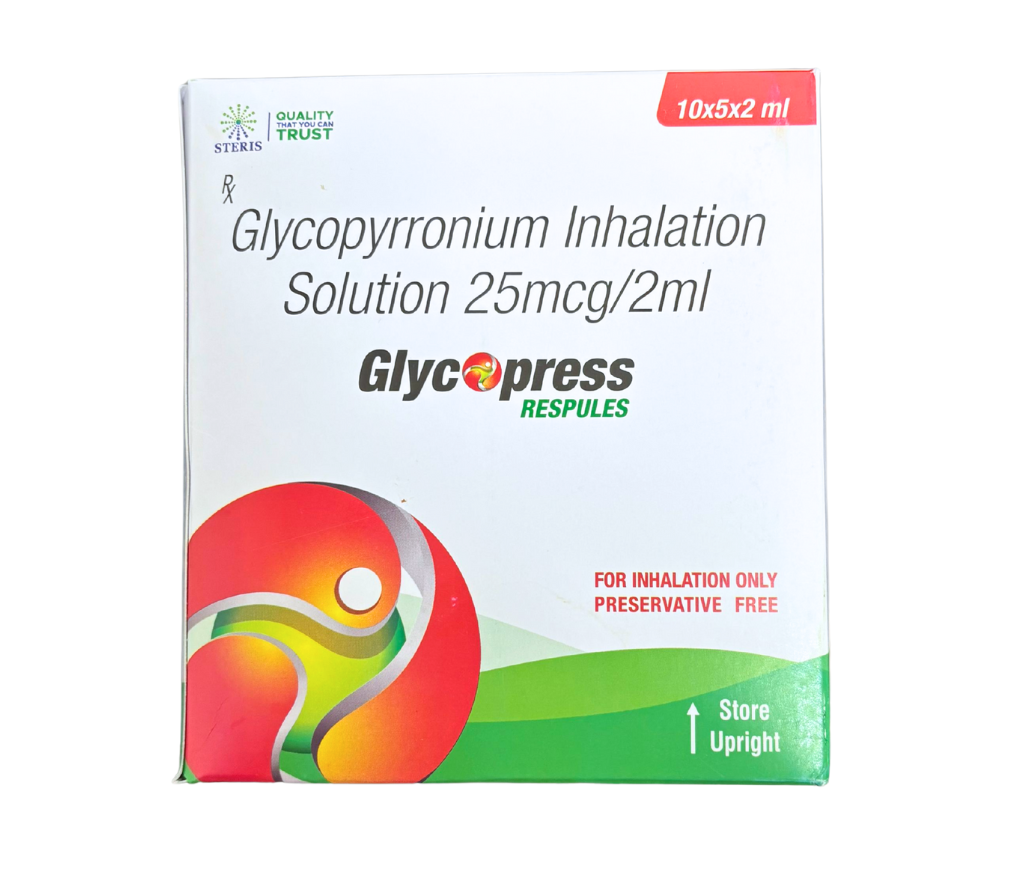
GLYCOPRESS is a clinically trusted injectable formulation containing Glycopyrrolate IP (equivalent to Glycopyrronium 25 mcg) in an isotonic solution of 2 ml. Glycopyrrolate is a well-established anticholinergic agent widely used in hospitals, operation theatres, and critical care settings. It plays a vital role in managing excessive secretions, supporting anesthesia procedures, and controlling certain cardiac and respiratory conditions.
Designed for precision and safety, GLYCOPRESS Injection ensures rapid onset of action and predictable results. Its isotonic formulation makes it suitable for parenteral administration, helping healthcare professionals achieve effective symptom control with minimal discomfort to patients. In Indian clinical practice, glycopyrrolate injections are commonly used in anesthesiology, emergency medicine, and intensive care units due to their reliable pharmacological profile.
Uses of GLYCOPRESS
GLYCOPRESS Injection is prescribed for multiple therapeutic indications where anticholinergic activity is required. Common uses include:
Preoperative and intraoperative use in anesthesia to reduce salivary, bronchial, and pharyngeal secretions
Prevention of bradycardia (slow heart rate) during surgical procedures or vagal stimulation
Adjunct treatment in anesthesia reversal, especially with anticholinesterase agents
Management of excessive respiratory secretions in critically ill or ventilated patients
Control of drooling (sialorrhea) in selected medical conditions under specialist supervision
Because glycopyrrolate does not easily cross the blood–brain barrier, it is often preferred over other anticholinergics for patients where central nervous system side effects need to be minimized.
Benefits of GLYCOPRESS
GLYCOPRESS offers several clinical and practical benefits that make it a preferred choice in hospital settings:
Effective secretion control: Helps maintain clear airways by reducing saliva and bronchial secretions
Cardiac safety profile: Useful in preventing procedure-related bradycardia
Minimal CNS side effects: Limited penetration into the brain reduces confusion or sedation
Rapid and predictable action: Ideal for emergency and perioperative use
Isotonic formulation: Enhances patient comfort and compatibility with injectable administration
Widely accepted in anesthesia practice: Trusted by anesthesiologists and critical care specialists
These benefits contribute to smoother surgical procedures, better airway management, and improved patient safety.
Dosage and Administration
The dosage of GLYCOPRESS Injection depends on the patient’s age, body weight, clinical condition, and the indication for use. It should only be administered by qualified healthcare professionals in a clinical setting.
Route of administration: Intravenous (IV) or intramuscular (IM), as advised by the physician
Adult dosage: Determined by the anesthesiologist or treating doctor based on procedural requirements
Pediatric dosage: Calculated carefully according to body weight and medical condition
GLYCOPRESS should be administered under strict medical supervision, especially in surgical or critical care environments. Self-administration is not recommended.
Side Effects of GLYCOPRESS
Like all medications, GLYCOPRESS may cause side effects, although not every patient experiences them. Most adverse effects are related to its anticholinergic action and are generally dose-dependent.
Commonly reported side effects include:
Dry mouth
Reduced sweating
Mild increase in heart rate
Blurred vision
Constipation
Less common or rare side effects may include:
Urinary retention
Palpitations
Injection site reactions
In most cases, side effects are temporary and resolve once the effect of the medicine wears off. Patients should inform their doctor immediately if they experience severe or persistent symptoms.
Precautions and Warnings
Before administering GLYCOPRESS Injection, certain precautions should be carefully considered to ensure patient safety.
Use with caution in patients with glaucoma, especially angle-closure glaucoma
Caution in patients with urinary retention or prostatic hypertrophy
Patients with cardiac disorders should be monitored for heart rate changes
Use during pregnancy and breastfeeding only if clearly prescribed by a doctor after risk–benefit assessment
Not recommended for self-use; hospital-based administration is essential
Healthcare providers should review the patient’s complete medical history, including current medications, to avoid potential drug interactions.
Conclusion
GLYCOPRESS Injection, containing Glycopyrrolate IP (equivalent to Glycopyrronium 25 mcg) in isotonic solution 2 ml, is a reliable and effective anticholinergic medication widely used in modern medical practice. Its proven efficacy in reducing secretions, preventing procedure-related bradycardia, and supporting anesthesia management makes it an essential drug in surgical and critical care settings.
With its rapid onset, predictable action, and favorable safety profile, GLYCOPRESS continues to be a trusted choice for healthcare professionals across India. When used under proper medical supervision and according to recommended guidelines, it plays a crucial role in improving procedural safety and patient outcomes.