
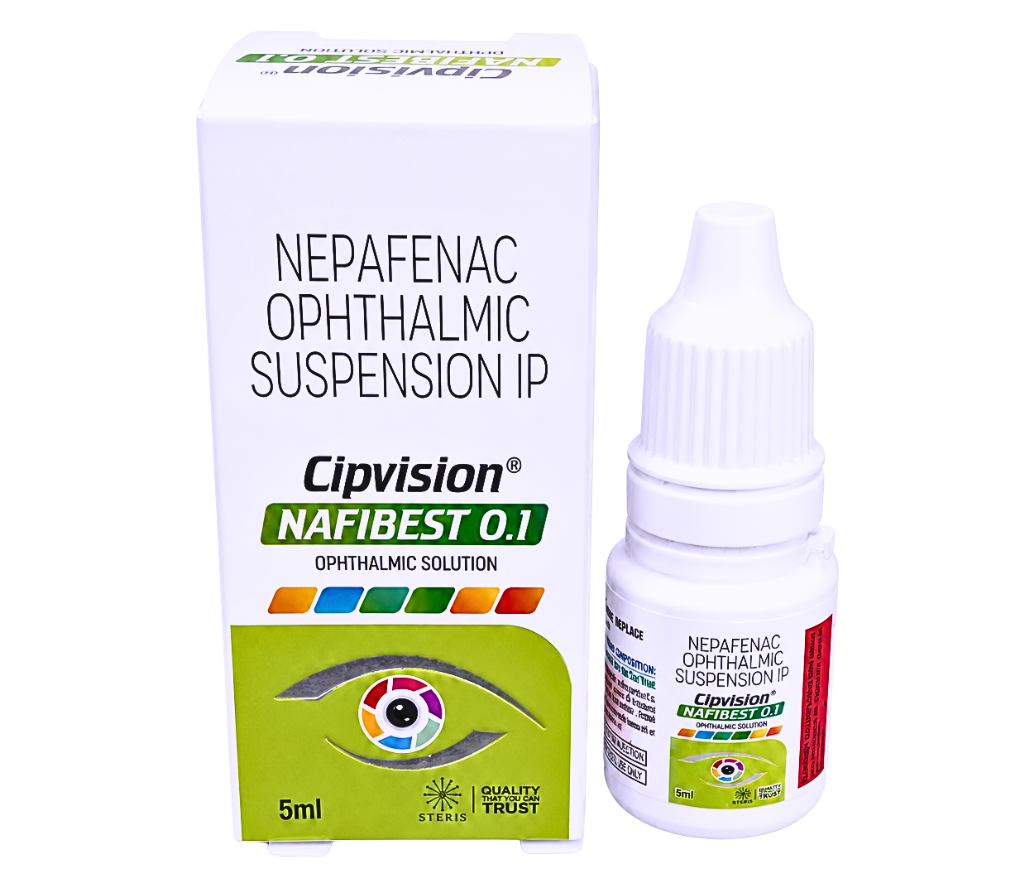
CIPVISION NAFIBEST 0.1 is a modern ophthalmic anti-inflammatory formulation containing Nepafenac Ophthalmic Suspension IP 0.1%. It is widely used in eye care to manage pain, swelling, and inflammation, especially after eye surgeries such as cataract procedures.
Nepafenac belongs to the class of non-steroidal anti-inflammatory drugs (NSAIDs). After instillation into the eye, it penetrates ocular tissues and is converted into its active form, amfenac. This active compound works by inhibiting cyclooxygenase (COX) enzymes, which are responsible for producing prostaglandins—chemical mediators that trigger inflammation, pain, and swelling.
By reducing prostaglandin production, CIPVISION NAFIBEST 0.1 helps control inflammation at the source, providing effective relief and supporting faster healing after eye surgery or injury. It is commonly prescribed by ophthalmologists for post-operative care and inflammatory eye conditions where precise and targeted anti-inflammatory action is required.
Uses of Nepafenac ophthalmic suspension ip
CIPVISION NAFIBEST 0.1 is primarily indicated for the treatment and management of eye conditions involving inflammation and pain.
1. Post-Cataract Surgery Inflammation
The main use of Nepafenac is to reduce inflammation and pain following cataract surgery. It helps improve surgical outcomes by controlling swelling and discomfort during the healing phase.
2. Prevention of Post-Operative Pain
After eye surgery, patients may experience pain and irritation. This medication provides effective relief by blocking inflammatory mediators.
3. Reduction of Ocular Swelling
It helps minimize swelling (edema) in the eye tissues caused by surgical trauma or injury.
4. Prevention of Cystoid Macular Edema (CME)
One of the important uses of Nepafenac is reducing the risk of CME, a condition that can affect central vision after cataract surgery.
5. Management of Ocular Inflammation
It may also be used in other inflammatory eye conditions where prostaglandin-mediated inflammation is involved.
Benefits of Nepafenac ophthalmic suspension ip
CIPVISION NAFIBEST 0.1 offers multiple therapeutic benefits, making it a widely trusted ophthalmic solution.
Effective Anti-Inflammatory Action
Nepafenac works by inhibiting prostaglandin synthesis, effectively reducing inflammation, redness, and swelling.
Fast Post-Surgical Recovery
It supports quicker recovery after eye surgery by controlling inflammation and minimizing complications.
Deep Ocular Penetration
Nepafenac is unique because it penetrates deeply into ocular tissues and converts into its active form inside the eye, ensuring targeted action.
Pain Relief
It provides significant relief from eye pain and discomfort associated with surgery or inflammation.
Reduced Risk of Complications
Regular use as prescribed helps lower the risk of post-operative complications such as macular edema.
Improved Patient Comfort
By reducing irritation and swelling, it enhances overall comfort during the healing process.
Dosage of Nepafenac ophthalmic suspension ip
The dosage of CIPVISION NAFIBEST 0.1 should always be determined by an ophthalmologist based on the patient’s condition.
General Dosage Guidelines
Typically, 1 drop in the affected eye(s) three times daily
Treatment usually starts 1 day before cataract surgery
Continued on the day of surgery and for 2 to 3 weeks post-surgery or as directed by the doctor
How to Use
Wash your hands thoroughly before use.
Shake the bottle well before instillation.
Tilt your head back and gently pull down the lower eyelid.
Instill one drop into the eye without touching the dropper tip.
Close your eyes gently for 1–2 minutes after application.
Important Instructions
Avoid touching the dropper tip to prevent contamination.
Maintain a 5–10 minute gap if using other eye medications.
Use regularly at the same time each day for best results.
Missed Dose
If a dose is missed, apply it as soon as remembered. If it is close to the next dose, skip the missed one. Do not double the dose.
Side Effects
Like all ophthalmic medications, CIPVISION NAFIBEST 0.1 may cause side effects, although not everyone experiences them.
Common Side Effects
Mild eye irritation or burning sensation
Temporary blurred vision after application
Eye redness
Watery eyes
Less Common Side Effects
Eye discomfort or pain
Sensitivity to light (photophobia)
Dry eyes
Foreign body sensation in the eye
Serious Side Effects
Delayed wound healing (rare with prolonged NSAID use)
Severe eye inflammation or worsening symptoms
Corneal complications in long-term use
Allergic reactions such as swelling, itching, or rash
If any severe or persistent side effects occur, immediate medical attention should be sought.
Precautions and Warnings
Before using CIPVISION NAFIBEST 0.1, several precautions should be followed for safe and effective use.
Medical History
Inform your doctor if you have:
Allergy to Nepafenac or other NSAIDs
History of corneal disorders or dry eye syndrome
Previous eye infections or injuries
Use in Pregnancy and Breastfeeding
Use only if prescribed by a healthcare professional, as safety data is limited.
Contact Lens Use
Avoid wearing contact lenses during treatment unless specifically advised by your doctor.
Driving and Machinery
Temporary blurred vision may occur after use. Avoid driving or operating machinery until vision is clear.
Long-Term Use Caution
Prolonged use may increase the risk of corneal complications. Always follow the prescribed duration strictly.
Drug Interactions
Inform your doctor about all medications you are using, especially other NSAIDs or eye drops.
Conclusion
CIPVISION NAFIBEST 0.1, containing Nepafenac Ophthalmic Suspension IP 0.1%, is a highly effective anti-inflammatory eye medication widely used in post-operative eye care, especially after cataract surgery. It works by reducing pain, inflammation, and swelling while promoting faster and safer healing.
Its ability to penetrate deep ocular tissues and act at the site of inflammation makes it a preferred choice among ophthalmologists for managing post-surgical recovery. However, proper usage under medical supervision is essential to ensure safety and optimal results.
For best outcomes, patients should follow dosage instructions carefully, take necessary precautions, and maintain regular follow-ups with their eye specialist.